
metalworkingmag.com
06
'26
Written on Modified on
Advanced Finishing Technologies for High-Performance Parts
How laser polishing, micro-finishing and plasma treatments are redefining precision manufacturing in industry.
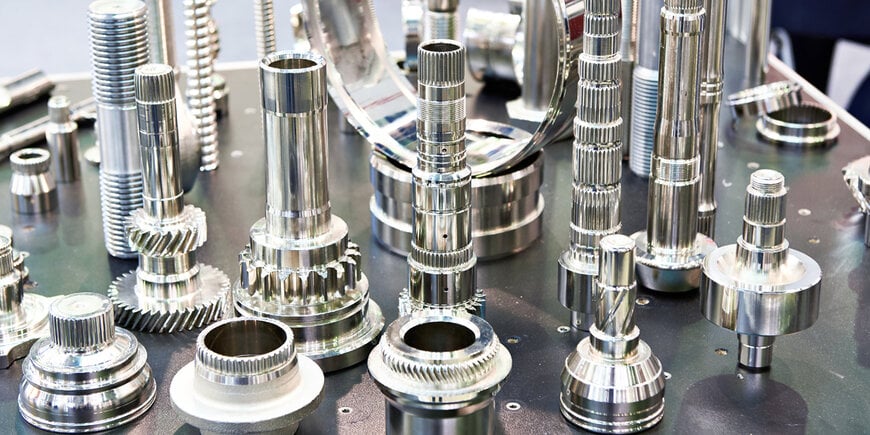
In the precision metalworking segment of modern manufacturing, achieving the desired geometry is only half the challenge. Equally important is the quality of the finished surface, which directly influences component performance, reliability, durability and service life. Industries such as aerospace, medical devices and automotive engineering increasingly demand parts with ultra-smooth surfaces, exceptional wear resistance, superior corrosion protection and precise dimensional tolerances. Conventional finishing techniques, while still widely used, often struggle to meet these increasingly stringent requirements efficiently.
This has accelerated the adoption of advanced finishing technologies that combine precision, automation and process consistency in the metalworking industry. Among the most significant developments are laser polishing, micro-finishing and plasma-based surface treatments. These technologies are transforming the way manufacturers optimise component surfaces without compromising dimensional accuracy.
As manufacturers pursue lighter materials, tighter tolerances and higher productivity, advanced finishing processes are becoming an integral part of high-performance manufacturing rather than merely the final production step.
Why surface finish matters
Surface quality has a profound impact on the functional characteristics of engineered components that goes beyond aesthetics. Even microscopic surface irregularities can lead to fatigue cracks, increase friction, accelerate wear or encourage corrosion.
In aerospace applications, surface integrity influences fatigue strength and aerodynamic performance. Medical implants require extremely smooth, contamination-free surfaces to improve biocompatibility and reduce bacterial adhesion. Automotive manufacturers seek reduced friction and enhanced wear resistance to improve fuel efficiency and component longevity.
Surface finishing therefore serves multiple objectives:
- Reducing surface roughness
- Improving fatigue life
- Enhancing corrosion resistance
- Lowering friction and wear
- Improving sealing characteristics
- Enhancing aesthetics, and
- Preparing surfaces for coating or bonding.
The evolution of advanced finishing technologies allows manufacturers to achieve these objectives with far greater consistency than conventional manual polishing or abrasive finishing methods.
Laser polishing: Precision without contact
Laser polishing has emerged as one of the most promising finishing technologies for complex geometries and additively manufactured components.
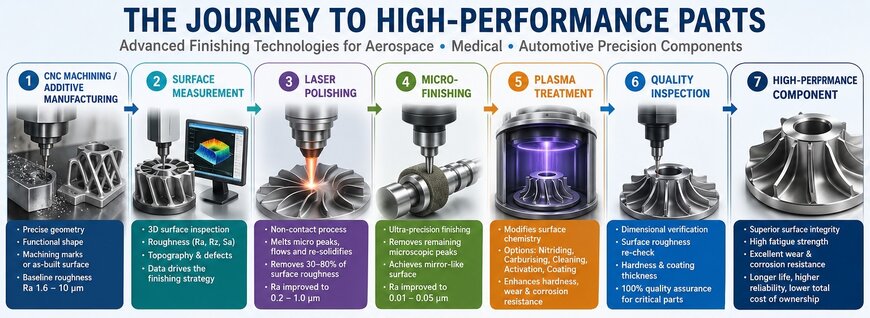
Instead of mechanically removing material, a precisely controlled laser beam melts an extremely thin surface layer. Surface tension causes the molten material to flow from peaks into valleys, producing a significantly smoother finish after rapid solidification.
Since the process is entirely non-contact, there is no tool wear, no abrasive contamination and minimal mechanical stress on the workpiece.
Advantages of laser polishing
Laser polishing offers several distinct benefits:
Laser polishing: Precision without contact
Laser polishing has emerged as one of the most promising finishing technologies for complex geometries and additively manufactured components.
Instead of mechanically removing material, a precisely controlled laser beam melts an extremely thin surface layer. Surface tension causes the molten material to flow from peaks into valleys, producing a significantly smoother finish after rapid solidification.
Since the process is entirely non-contact, there is no tool wear, no abrasive contamination and minimal mechanical stress on the workpiece.
Advantages of laser polishing
Laser polishing offers several distinct benefits:
- Significant reduction in surface roughness
- Ability to finish intricate internal geometries
- Excellent suitability for complex 3D printed parts
- Highly repeatable automated operation
- Reduced post-processing time
- Improved fatigue performance, and
- Minimal material removal.
For manufacturers increasingly adopting metal additive manufacturing, laser polishing solves one of the biggest challenges – the inherently rough surface produced during powder-bed fusion or directed energy deposition.
The technology is especially valuable for titanium, stainless steel, Inconel, cobalt-chromium alloys and tool steels commonly used in aerospace and medical sectors.
Aerospace applications
Aircraft components operate under extreme thermal and mechanical loads, making surface quality critical. Laser polishing of aerospace components is an advanced post-processing technique using a concentrated laser beam to melt and smooth microscopic surface peaks, significantly improving fatigue life, aerodynamics, and reducing friction without mechanical wear.
Laser polishing is increasingly applied to:
The technology is especially valuable for titanium, stainless steel, Inconel, cobalt-chromium alloys and tool steels commonly used in aerospace and medical sectors.
Aerospace applications
Aircraft components operate under extreme thermal and mechanical loads, making surface quality critical. Laser polishing of aerospace components is an advanced post-processing technique using a concentrated laser beam to melt and smooth microscopic surface peaks, significantly improving fatigue life, aerodynamics, and reducing friction without mechanical wear.
Laser polishing is increasingly applied to:
- Turbine blades
- Fuel nozzles
- Heat exchanger components
- Aerospace brackets
- Structural titanium parts, and
- Additively manufactured engine components.
Smoother surfaces reduce stress concentrations, improve airflow characteristics and enhance fatigue resistance. The process also enables finishing of intricate cooling channels that would be impossible to polish mechanically.
With aerospace manufacturers embracing lightweight lattice structures produced by additive manufacturing, laser polishing is becoming an enabling technology.
Medical device manufacturing
Medical implants demand exceptionally high-quality surface finishes.
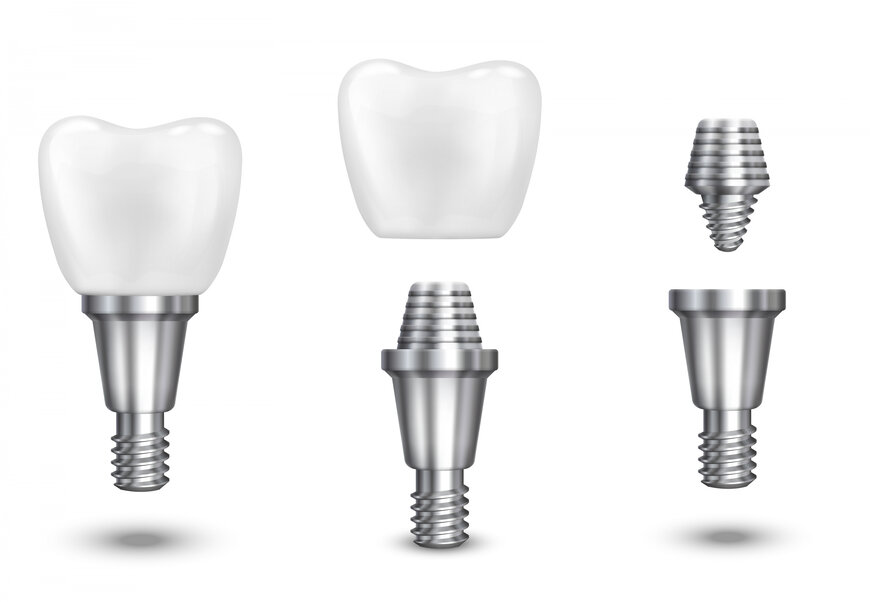
Orthopaedic implants, spinal cages, dental implants and surgical instruments benefit from laser polishing through:
With aerospace manufacturers embracing lightweight lattice structures produced by additive manufacturing, laser polishing is becoming an enabling technology.
Medical device manufacturing
Medical implants demand exceptionally high-quality surface finishes.
Orthopaedic implants, spinal cages, dental implants and surgical instruments benefit from laser polishing through:
- Reduced bacterial adhesion
- Improved biocompatibility
- Enhanced corrosion resistance
- Easier sterilisation, and
- Improved patient comfort.
Laser polishing also eliminates many manual finishing operations that introduce variability between components, improving manufacturing consistency and regulatory compliance.
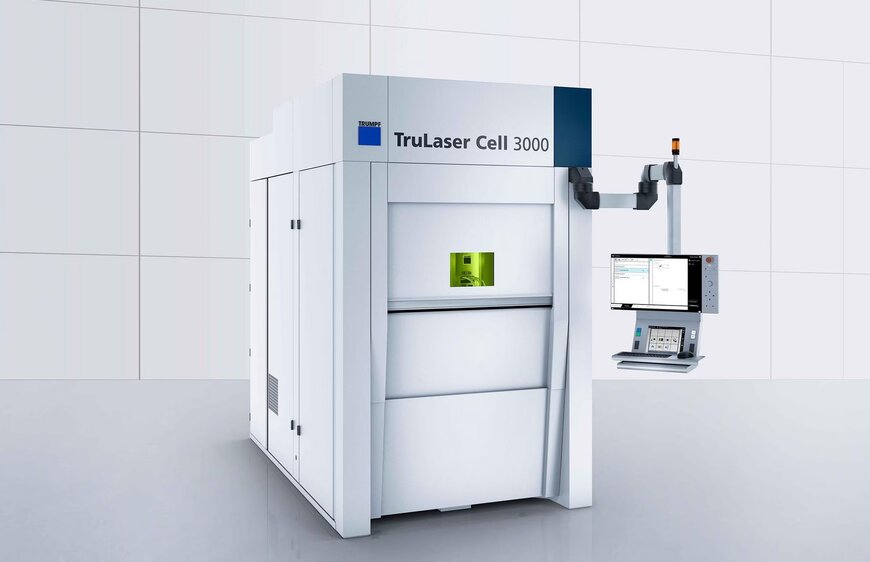
Major industrial laser companies offering advanced laser processing, micro-finishing, and surface treatment systems for high-performance metals include Trumpf (Germany, IPG Photonics (USA), and Coherent Corp. (USA). Fraunhofer ILT (Germany), while an R&D institute rather than a commercial vendor machine-builder, co-develops and licenses automated 3D laser-polishing hardware setups implemented across aerospace and mould manufacturing supply chains.
Micro-finishing: Achieving nanometre-level precision
Micro-finishing, sometimes called superfinishing, takes surface refinement to an even higher level. Unlike conventional grinding or polishing, micro-finishing removes only microscopic amounts of material using specialised abrasive stones or precision films under carefully controlled pressure.
The objective is not simply smoother surfaces but the creation of highly engineered surface textures optimised for specific operating conditions. Surface roughness values below 0.05 micrometres are routinely achievable.
The top global and regional vendors for microfinishing and superfinishing systems for automotive components include Grind Master, Thielenhaus Technologies, and Nagel Group.
Automotive industry driving adoption
Automotive manufacturers have become major users of micro-finishing technologies, particularly for drivetrain components.
Common applications include:
Major industrial laser companies offering advanced laser processing, micro-finishing, and surface treatment systems for high-performance metals include Trumpf (Germany, IPG Photonics (USA), and Coherent Corp. (USA). Fraunhofer ILT (Germany), while an R&D institute rather than a commercial vendor machine-builder, co-develops and licenses automated 3D laser-polishing hardware setups implemented across aerospace and mould manufacturing supply chains.
Micro-finishing: Achieving nanometre-level precision
Micro-finishing, sometimes called superfinishing, takes surface refinement to an even higher level. Unlike conventional grinding or polishing, micro-finishing removes only microscopic amounts of material using specialised abrasive stones or precision films under carefully controlled pressure.
The objective is not simply smoother surfaces but the creation of highly engineered surface textures optimised for specific operating conditions. Surface roughness values below 0.05 micrometres are routinely achievable.
The top global and regional vendors for microfinishing and superfinishing systems for automotive components include Grind Master, Thielenhaus Technologies, and Nagel Group.
Automotive industry driving adoption
Automotive manufacturers have become major users of micro-finishing technologies, particularly for drivetrain components.
Common applications include:
- Crankshafts
- Camshafts
- Gear shafts
- Bearings
- Transmission gears
- Fuel injection components, and
- Electric vehicle drive systems
Micro-finished surfaces reduce friction between moving components, leading to:
- Lower power losses
- Reduced operating temperatures
- Extended bearing life
- Lower lubricant consumption
- Reduced noise and vibration, and
- Improved fuel economy.
As electric vehicles become more prevalent, micro-finishing assumes even greater importance. EV drivetrains operate at higher rotational speeds than conventional engines, making precision surface finishes essential for quiet and efficient operation.
The rise of isotropic superfinishing
One significant advancement is isotropic superfinishing (ISF), which removes machining marks without altering component geometry.
Unlike traditional directional polishing, isotropic finishes create uniformly smooth surfaces with no preferential direction. This improves lubricant film formation while reducing contact stress between mating surfaces.
High-performance racing transmissions, aerospace gears and precision industrial gearboxes increasingly employ isotropic finishing to maximise efficiency and durability.
Leading vendors of isotropic superfinishing technologies include REM Surface Engineering, Curtiss-Wright Surface Technologies, OTEC Präzisionsfinish, and Indiana Precision Grinding. These key market players provide advanced chemical and mechanical surface modification systems designed to reduce surface roughness and micro-asperities.
Plasma surface treatments
While laser polishing and micro-finishing primarily improve surface topography, plasma treatments modify the surface chemistry itself.
Plasma is an ionised gas containing energetic ions, electrons and reactive species capable of altering material surfaces without affecting the bulk properties.
Different plasma processes include:
The rise of isotropic superfinishing
One significant advancement is isotropic superfinishing (ISF), which removes machining marks without altering component geometry.
Unlike traditional directional polishing, isotropic finishes create uniformly smooth surfaces with no preferential direction. This improves lubricant film formation while reducing contact stress between mating surfaces.
High-performance racing transmissions, aerospace gears and precision industrial gearboxes increasingly employ isotropic finishing to maximise efficiency and durability.
Leading vendors of isotropic superfinishing technologies include REM Surface Engineering, Curtiss-Wright Surface Technologies, OTEC Präzisionsfinish, and Indiana Precision Grinding. These key market players provide advanced chemical and mechanical surface modification systems designed to reduce surface roughness and micro-asperities.
Plasma surface treatments
While laser polishing and micro-finishing primarily improve surface topography, plasma treatments modify the surface chemistry itself.
Plasma is an ionised gas containing energetic ions, electrons and reactive species capable of altering material surfaces without affecting the bulk properties.
Different plasma processes include:
- Plasma nitriding
- Plasma carburising
- Plasma cleaning
- Plasma activation
- Plasma coating, and
- Plasma-assisted chemical vapour deposition.
These treatments significantly improve surface characteristics while preserving dimensional accuracy.
Plasma nitriding for enhanced wear resistance
Among plasma technologies, plasma nitriding has become particularly important.
Nitrogen ions diffuse into the metal surface, forming extremely hard nitrides that enhance:
Plasma nitriding for enhanced wear resistance
Among plasma technologies, plasma nitriding has become particularly important.
Nitrogen ions diffuse into the metal surface, forming extremely hard nitrides that enhance:
- Wear resistance
- Fatigue strength
- Corrosion resistance
- Surface hardness, and
- Component life.
Unlike conventional gas nitriding, plasma nitriding offers:
- Lower processing temperatures
- Better process control
- Reduced distortion
- Uniform treatment of complex shapes, and
- Environmentally cleaner operation.
The process is widely used for gears, dies, moulds, crankshafts, injection moulding tools and aerospace components. Top global and regional plasma (ion) nitriding service and equipment providers include Bodycote, Advanced Heat Treat Corp (AHT), Plasmon Surface Technologies, Rübig, and Ion Heat. Another notable company is Ionitech Ltd (Bulgaria), which has created a niche with global clientele for its plasma (ion) nitriding equipment.
Plasma treatment in medical applications
Medical device manufacturers use plasma treatments to improve implant performance.
Plasma surface activation enhances the adhesion of bioactive coatings while improving wettability and tissue integration. For polymer-based medical devices, plasma treatment improves bonding characteristics without the use of aggressive chemical primers.
Catheters, vascular implants, diagnostic devices and surgical instruments all benefit from plasma-enhanced surface engineering.
Top vendors of advanced finishing technologies for medical devices include Extrude Hone, GPAINNOVA (DLyte), and Growel Engineering, and Paragon Medical, a business unit of AMETEK, Inc. The latter is a global contract design and manufacturing organisation supporting medical device companies across orthopedics, surgical, drug delivery, cardiovascular, neurology, and other advanced medical markets.
Supporting advanced materials
The growing use of advanced engineering materials has further increased demand for sophisticated finishing technologies.
Titanium alloys, nickel-based superalloys, ceramics and composite materials are notoriously difficult to finish using traditional methods.
Laser-based finishing and plasma technologies offer non-contact processing that minimises mechanical damage while maintaining tight dimensional tolerances.
As additive manufacturing continues to gain acceptance, finishing technologies capable of processing intricate geometries will become even more important.
Automation and digital integration
Advanced finishing technologies are increasingly integrated into automated manufacturing cells.
Robotic laser polishing systems now incorporate machine vision and real-time process monitoring to ensure consistent quality. Intelligent sensors measure surface roughness during production, enabling adaptive process control.
Artificial intelligence and machine learning are beginning to optimise finishing parameters automatically by analysing variables such as material composition, geometry and thermal behaviour.
Digital twins are also being used to simulate finishing processes before production, reducing development time and minimising costly trial-and-error experimentation.
These developments align advanced finishing with the broader goals of Industry 4.0, where manufacturing processes become increasingly autonomous, data-driven and interconnected.
Sustainability benefits
Modern finishing technologies also contribute to more sustainable manufacturing.
Laser polishing reduces the need for abrasive consumables, polishing compounds and chemical finishing agents. Plasma treatments consume fewer hazardous chemicals than conventional surface treatment methods, while many processes generate less waste.
Micro-finishing extends component life by reducing wear and improving efficiency, lowering the overall environmental footprint throughout the product lifecycle.
Longer-lasting aerospace, automotive and industrial components translate directly into lower resource consumption and reduced maintenance requirements.
The road ahead
As precision engineering continues to evolve, advanced finishing technologies will play an increasingly strategic role in manufacturing. The convergence of laser processing, precision abrasives, plasma engineering, robotics and artificial intelligence is enabling manufacturers to produce components with unprecedented levels of surface quality, consistency and functional performance.
For aerospace, medical and automotive industries – where even microscopic imperfections can have significant consequences – surface engineering is becoming a critical competitive differentiator. Manufacturers investing in these advanced finishing capabilities are not only improving product quality but also enhancing productivity, sustainability and process reliability.
In the years ahead, advanced finishing will no longer be viewed as a secondary manufacturing operation. Instead, it will become an essential part of the digital production ecosystem, ensuring that high-performance components meet the increasingly demanding expectations of next-generation engineering applications.
Article contributed by Milton D’Silva, a freelance technical writer, and former editor of Industrial Products Finder, India.
Plasma treatment in medical applications
Medical device manufacturers use plasma treatments to improve implant performance.
Plasma surface activation enhances the adhesion of bioactive coatings while improving wettability and tissue integration. For polymer-based medical devices, plasma treatment improves bonding characteristics without the use of aggressive chemical primers.
Catheters, vascular implants, diagnostic devices and surgical instruments all benefit from plasma-enhanced surface engineering.
Top vendors of advanced finishing technologies for medical devices include Extrude Hone, GPAINNOVA (DLyte), and Growel Engineering, and Paragon Medical, a business unit of AMETEK, Inc. The latter is a global contract design and manufacturing organisation supporting medical device companies across orthopedics, surgical, drug delivery, cardiovascular, neurology, and other advanced medical markets.
Supporting advanced materials
The growing use of advanced engineering materials has further increased demand for sophisticated finishing technologies.
Titanium alloys, nickel-based superalloys, ceramics and composite materials are notoriously difficult to finish using traditional methods.
Laser-based finishing and plasma technologies offer non-contact processing that minimises mechanical damage while maintaining tight dimensional tolerances.
As additive manufacturing continues to gain acceptance, finishing technologies capable of processing intricate geometries will become even more important.
Automation and digital integration
Advanced finishing technologies are increasingly integrated into automated manufacturing cells.
Robotic laser polishing systems now incorporate machine vision and real-time process monitoring to ensure consistent quality. Intelligent sensors measure surface roughness during production, enabling adaptive process control.
Artificial intelligence and machine learning are beginning to optimise finishing parameters automatically by analysing variables such as material composition, geometry and thermal behaviour.
Digital twins are also being used to simulate finishing processes before production, reducing development time and minimising costly trial-and-error experimentation.
These developments align advanced finishing with the broader goals of Industry 4.0, where manufacturing processes become increasingly autonomous, data-driven and interconnected.
Sustainability benefits
Modern finishing technologies also contribute to more sustainable manufacturing.
Laser polishing reduces the need for abrasive consumables, polishing compounds and chemical finishing agents. Plasma treatments consume fewer hazardous chemicals than conventional surface treatment methods, while many processes generate less waste.
Micro-finishing extends component life by reducing wear and improving efficiency, lowering the overall environmental footprint throughout the product lifecycle.
Longer-lasting aerospace, automotive and industrial components translate directly into lower resource consumption and reduced maintenance requirements.
The road ahead
As precision engineering continues to evolve, advanced finishing technologies will play an increasingly strategic role in manufacturing. The convergence of laser processing, precision abrasives, plasma engineering, robotics and artificial intelligence is enabling manufacturers to produce components with unprecedented levels of surface quality, consistency and functional performance.
For aerospace, medical and automotive industries – where even microscopic imperfections can have significant consequences – surface engineering is becoming a critical competitive differentiator. Manufacturers investing in these advanced finishing capabilities are not only improving product quality but also enhancing productivity, sustainability and process reliability.
In the years ahead, advanced finishing will no longer be viewed as a secondary manufacturing operation. Instead, it will become an essential part of the digital production ecosystem, ensuring that high-performance components meet the increasingly demanding expectations of next-generation engineering applications.
Article contributed by Milton D’Silva, a freelance technical writer, and former editor of Industrial Products Finder, India.
