
metalworkingmag.com
19
'25
Written on Modified on
Managing Metalworking Fluids During Planned Production Shutdowns
FUCHS Lubricants Co. outlines how controlled preparation, monitoring, and restart procedures help maintain metalworking fluid stability during extended production shutdowns in machining-intensive industries.
www.fuchs.com
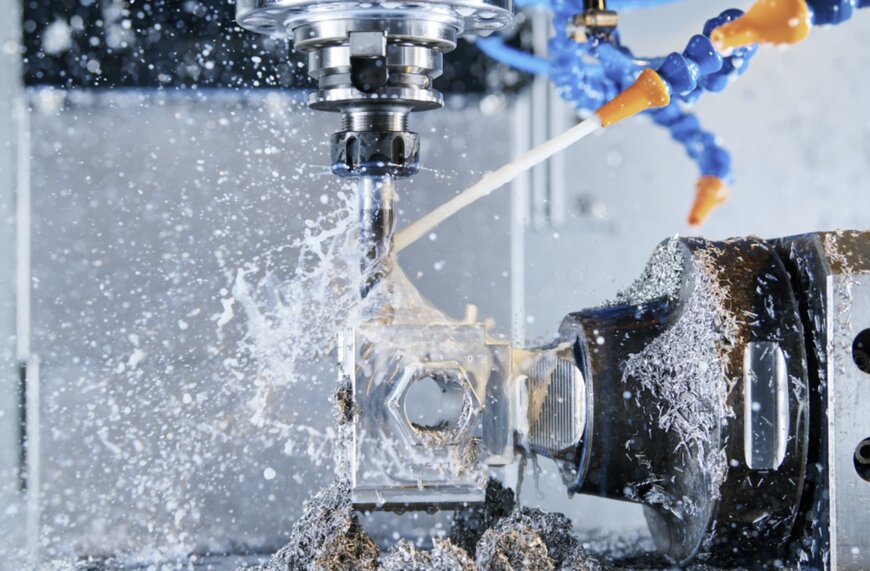
Planned shutdowns are common across automotive, aerospace, tube and pipe, and general metal cutting operations, but they introduce specific risks for metalworking fluids (MWFs). When circulation stops for days or weeks, changes in chemistry, temperature, and contamination dynamics can undermine fluid performance, leading to restart delays, corrosion, biological growth, and quality issues if systems are not prepared and managed systematically.
Why idle systems behave differently from running ones
During normal operation, water-miscible metalworking fluids are continuously circulated, filtered, skimmed, and replenished, maintaining chemical and biological balance. Shutdown conditions disrupt this equilibrium. Tramp oil accumulates at the surface, reducing oxygen transfer and creating favorable conditions for microbial growth. Fine particulates settle into low-oxygen zones, while evaporation preferentially removes water, increasing concentration and shifting pH.
In large central systems, where volumes can reach tens of thousands of gallons, these effects scale quickly. A single unmanaged shutdown can affect multiple machines and an entire production line, turning downtime into a system-wide chemical stagnation event. Smaller standalone sumps are easier to correct, but central systems behave more like large, inactive reservoirs, with proportionally higher risk.
Operational awareness further influences outcomes. In many plants, coolant is treated as a background utility rather than a controlled process variable. Limited training, staff turnover, and inconsistent monitoring can allow early warning signs—such as rising tramp oil or pH drift—to go unnoticed before shutdown, increasing the likelihood of restart problems, scrap, and unplanned maintenance.
Establishing chemical stability before shutdown
Effective shutdown preparation starts with verifying that the fluid can remain stable without circulation. While refractometer readings indicate concentration, they do not capture buffering capacity. Total alkalinity testing, performed by a qualified laboratory, provides a clearer picture of resistance to pH drift, corrosion, and microbial activity. These results can be translated into specific concentration targets and treatment recommendations so the system enters shutdown in a robust state.
Biological screening is equally important. Dip-slide testing identifies early bacterial or fungal activity that can expand rapidly once agitation stops. If intervention is required, sequencing matters: biocides must be added only within the correct pH window to avoid destabilizing the emulsion or triggering odor-related reactions. Improper treatment can prolong downtime and complicate the restart.
Mechanical preparation also reduces risk. Removing tramp oil limits microbial nutrient sources, while cleaning sludge from sumps, filters, and return lines eliminates stagnant pockets where localized acidity and biological growth can develop. For central systems, these steps reduce the formation of untreated zones during extended idle periods. Final adjustments typically bring concentration to the upper end of the control range to ensure adequate levels of emulsifiers, corrosion inhibitors, and stabilizers throughout the shutdown.
Managing fluids during extended downtime
Once production stops, environmental stability becomes the primary control lever. Keeping central systems closed minimizes evaporation and limits exposure to airborne contamination. Temperature stability also matters, as large swings can accelerate microbial growth or disrupt emulsion balance.
Some systems support low-energy circulation or supervised recirculation cycles designed to maintain homogeneity without stressing pumps and seals. Where such features are absent, short, controlled circulation periods may be safer than continuous unattended operation, which can introduce risks such as cavitation, seal failure, or filter blockage.
Periodic inspections remain valuable even during shutdown. Visual checks for separation, odor, or unexpected fluid loss provide early indicators of imbalance and allow corrective action before restart conditions worsen.

Bringing systems back online without disruption
Restarting after a shutdown requires verification before machining loads increase. Visual inspection often reveals early signs of instability through changes in color, clarity, or odor. Cutting chambers and machine sumps should be checked for stagnant pockets or residual chips that can cause localized corrosion independent of the central system.
Because water typically evaporates faster than oil, elevated concentration is common after downtime. Confirming concentration and pH is the first step, followed by controlled dilution to restore the target ratio. For central systems or high-risk environments, post-shutdown laboratory analysis provides data on alkalinity, microbial levels, and tramp oil loading, helping plants refine future shutdown procedures rather than repeating the same corrective cycles.
The role of formulation and technical support
Fluid behavior during idle periods is closely tied to formulation. Modern metalworking fluids are engineered to maintain stability across variations in temperature, water hardness, tramp oil exposure, and intermittent agitation. Semi-synthetic formulations with optimized additive efficiency are designed to resist foaming, maintain lubricity, and limit microbial growth, which is particularly relevant during low-attendance or lights-out periods.
Regulatory constraints add complexity. Restrictions on certain biocides require formulations that remain biologically stable without relying on prohibited chemistries. Suppliers operating across multiple regulatory regions must design fluids that deliver consistent performance while meeting local compliance requirements, enabling manufacturers to standardize coolant strategies across global facilities.
Technical support complements formulation. Shutdown outcomes are influenced not only by chemistry but also by operator training and procedural consistency. Structured guidance that explains both actions and underlying mechanisms helps elevate coolant management from a background task to a controlled process variable.
Planning shutdowns as part of routine coolant management
Planned shutdowns will always introduce risk for metalworking fluids, but those risks are predictable and manageable. Treating downtime as a defined operating condition—rather than an exception—allows plants to integrate shutdown readiness into everyday fluid management. Most post-shutdown issues, including microbial growth, pH collapse, corrosion, and foam-related pump problems, can be avoided through preparation, monitoring, and verification.
With systematic testing, controlled intervention, and informed restart practices, manufacturers can protect tooling, maintain part quality, and resume production without extended delays. In this context, FUCHS Lubricants Co. positions its ECOCOOL product line, laboratory services, and field engineering support as components of an integrated approach to maintaining metalworking fluid stability through planned production shutdowns.
www.fuchs.com
