
metalworkingmag.com
04
'26
Written on Modified on
DMG MORI Optimizes Coolant Flow for Energy-Efficient Machining
Adaptive control technology regulates high-pressure coolant delivery during machining to reduce pump energy consumption and coolant use while maintaining tool life and surface quality.
en.dmgmori.com
Reducing energy consumption in machining operations
In metalworking industries such as automotive manufacturing, aerospace component production, and precision engineering, high-pressure coolant systems are widely used to maintain cutting performance, extend tool life, and improve surface finish. However, coolant pumps and associated equipment represent a significant share of total machine tool energy consumption.
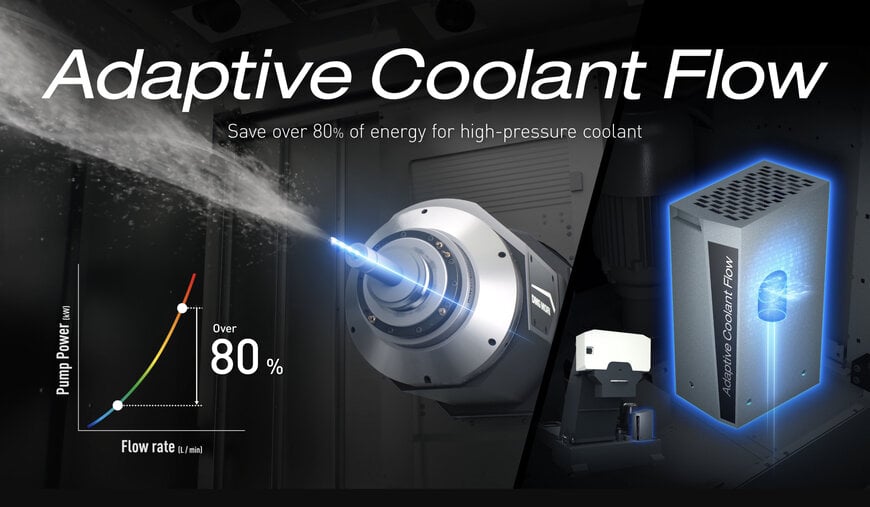
DMG MORI has introduced Adaptive Coolant Flow, a system designed to automatically regulate high-pressure coolant delivery during machining. By adjusting coolant flow according to the cutting tool’s requirements rather than operating continuously at maximum pressure, the technology reduces energy use while maintaining machining stability and performance.
Automatic adjustment of coolant flow based on tool requirements
Conventional high-pressure coolant systems typically run at constant maximum pressure, regardless of the specific tool or cutting conditions. This results in unnecessary coolant circulation and increased energy demand from high-pressure pumps.
The Adaptive Coolant Flow system addresses this limitation through a combination of control software and a dedicated coolant-tank control unit. The software calculates the optimal coolant flow rate required for each cutting tool and machining operation, and the control unit regulates pump output accordingly.
This dynamic adjustment ensures that the system delivers only the pressure and flow rate required for the process, reducing excess coolant use without affecting cutting efficiency.
Integrated sensors and real-time monitoring
The coolant control unit incorporates several integrated sensors that continuously monitor key operating parameters, including:
- Coolant flow rate
- System pressure
- Coolant concentration
- Temperature
Operational data are displayed in real time through the ERGOline X interface with CELOS X, enabling machine operators to monitor coolant conditions and system performance during machining.
Additive manufacturing enables compact high-pressure components
One of the technical challenges in developing the system involved producing complex high-pressure piping components required for precise flow regulation. These components cannot be manufactured using conventional machining methods.
To address this, DMG MORI produced the parts using additive manufacturing on the LASERTEC 30 SLM metal 3D printing platform. This approach enabled the creation of compact internal channel geometries that improve pressure distribution and flow control while allowing the entire unit to be integrated directly onto the coolant tank.
Reduced pump energy consumption and coolant usage
By regulating coolant delivery dynamically, the system significantly lowers energy demand from high-pressure pumps. According to DMG MORI, Adaptive Coolant Flow can *reduce pump energy consumption by more than 80 %1, while maintaining tool life and machining surface quality.
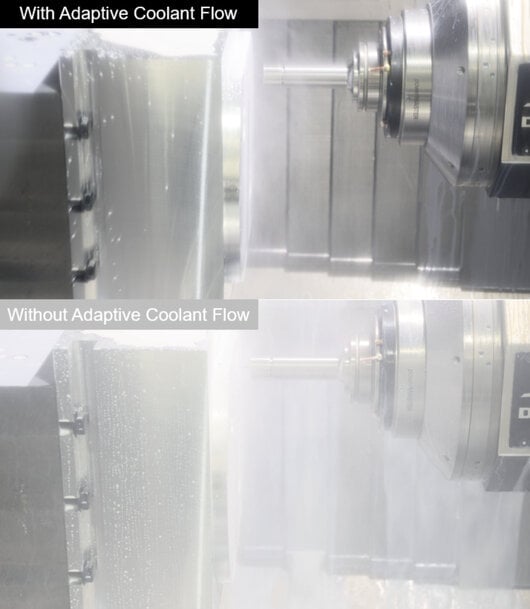
In addition to energy savings, optimized coolant delivery reduces coolant mist formation and evaporation in the machining area, which decreases overall coolant consumption. Lower fluid loss means fewer coolant refills and more stable operation during automated or unattended machining, including nighttime or weekend production cycles.
Supporting sustainable manufacturing initiatives
The system complements DMG MORI’s broader efforts to reduce energy consumption in machine tools, including previously introduced energy-saving functions such as GREENMODE.
As manufacturing companies face rising electricity costs and stricter sustainability targets, technologies that optimize auxiliary systems—such as coolant circulation—are becoming an important part of improving overall machine efficiency and reducing operational emissions.
Adaptive Coolant Flow therefore represents a practical approach to improving energy efficiency in machining operations while supporting ongoing industrial sustainability initiatives.
www.dmgmori.com
Additive manufacturing enables compact high-pressure components
One of the technical challenges in developing the system involved producing complex high-pressure piping components required for precise flow regulation. These components cannot be manufactured using conventional machining methods.
To address this, DMG MORI produced the parts using additive manufacturing on the LASERTEC 30 SLM metal 3D printing platform. This approach enabled the creation of compact internal channel geometries that improve pressure distribution and flow control while allowing the entire unit to be integrated directly onto the coolant tank.
Reduced pump energy consumption and coolant usage
By regulating coolant delivery dynamically, the system significantly lowers energy demand from high-pressure pumps. According to DMG MORI, Adaptive Coolant Flow can *reduce pump energy consumption by more than 80 %1, while maintaining tool life and machining surface quality.
In addition to energy savings, optimized coolant delivery reduces coolant mist formation and evaporation in the machining area, which decreases overall coolant consumption. Lower fluid loss means fewer coolant refills and more stable operation during automated or unattended machining, including nighttime or weekend production cycles.
Supporting sustainable manufacturing initiatives
The system complements DMG MORI’s broader efforts to reduce energy consumption in machine tools, including previously introduced energy-saving functions such as GREENMODE.
As manufacturing companies face rising electricity costs and stricter sustainability targets, technologies that optimize auxiliary systems—such as coolant circulation—are becoming an important part of improving overall machine efficiency and reducing operational emissions.
Adaptive Coolant Flow therefore represents a practical approach to improving energy efficiency in machining operations while supporting ongoing industrial sustainability initiatives.
www.dmgmori.com
