
Optimizing Automated Battery Assembly Performance with Styler Welding Inspection Systems
Advanced vision inspection and process control from Styler Welding ensure high-precision defect detection and consistent quality across automated battery production lines to maximize manufacturing efficiency.
www.stylerwelding.com
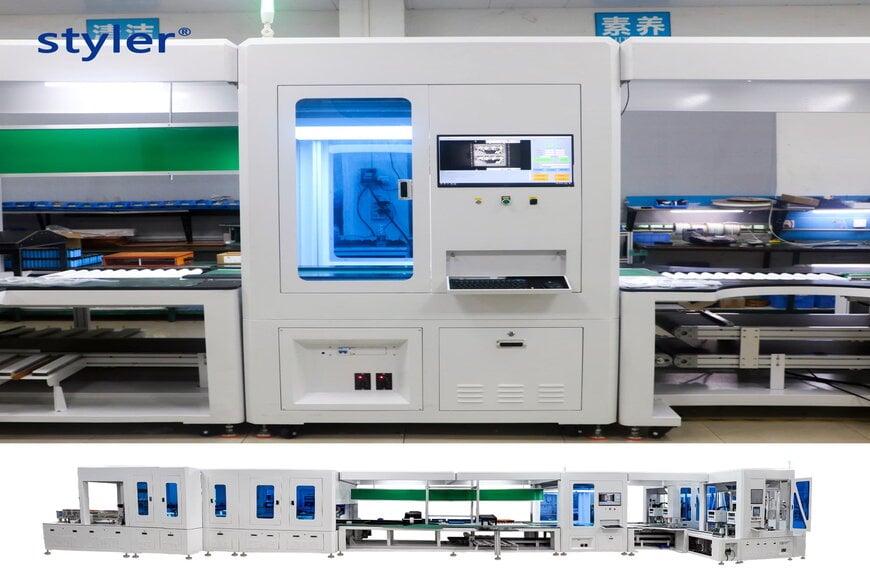
In automated battery assembly, the primary challenge is achieving a perfect balance between high-speed production and flawless quality. While many systems rely on standard automated optical inspection, the most advanced solutions differentiate themselves by integrating real-time process control directly with vision intelligence. This dual-layered approach ensures that defects are not only identified after they occur but are actively prevented by monitoring the variables that cause them.
Enhancing Precision Through Integrated Vision Systems
Modern battery manufacturing requires more than just a camera at the end of the line. High-performance assembly lines now utilize vision systems as the "sensory organs" of the process. These systems perform three critical roles: precise positioning of components, instant verification of assembly steps, and final quality assessment. By using high-resolution cameras and specialized optics, these systems can guide robotic arms with sub-millimeter accuracy, eliminating the need for rigid and expensive mechanical fixtures. This flexibility allows manufacturers to adapt quickly to different battery formats, providing a significant competitive advantage in a rapidly evolving market.
Real-Time Process Control and Defect Prevention
Traditional inspection methods often detect problems only after a part has been completed, leading to wasted materials and costly scrap. Superior automated lines go a step further by incorporating in-line process monitoring. By tracking electrical, thermal, and mechanical parameters during the actual welding or assembly phase, the system can identify deviations the moment they happen. For example, monitoring the infrared and visible spectrum during laser welding allows the system to detect instabilities in the weld pool before a defect fully forms. This proactive control loop drastically reduces the defect rate and accelerates the time it takes for a new production line to reach peak efficiency.
Machine Learning and Adaptive Inspection
A major differentiator in current technology is the move from rule-based programming to AI-powered analysis. Conventional vision systems are often limited by predefined rules and may struggle with the "specular glare" of metallic battery surfaces or subtle variations in weld seams. Advanced systems utilize deep learning algorithms to analyze thousands of images, learning to distinguish between acceptable cosmetic anomalies and true structural defects. This adaptive capability ensures high reliability in defect detection, even in complex environments, ensuring that every battery pack meets the rigorous safety and performance standards required for electric vehicles and energy storage systems.
www.stylerwelding.com
