
metalworkingmag.com
10
'26
Written on Modified on
Additive Manufacturing and Laser Processing of Ultra-Hard Cutting Tools
DMG MORI integrates powder bed fusion and femtosecond laser ablation to automate the production of complex polycrystalline diamond and carbide tooling.
en.dmgmori.com
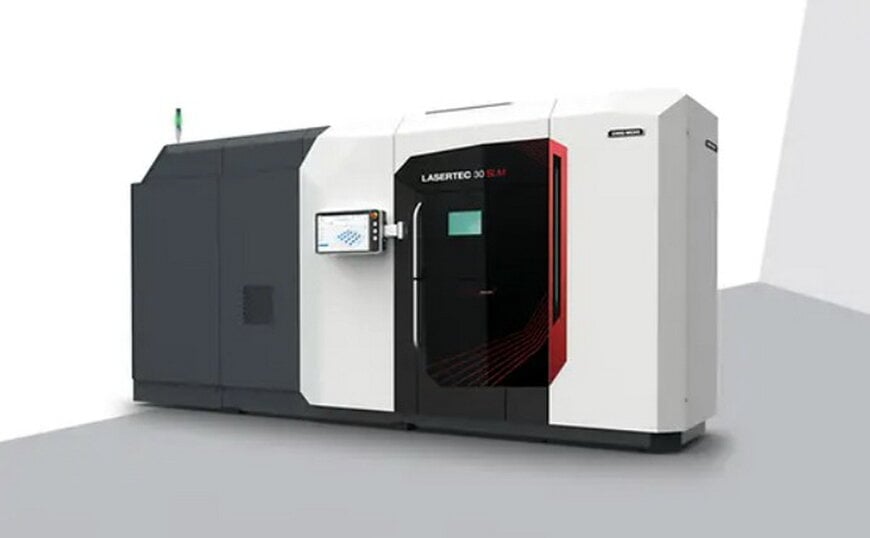
The manufacturing of high-performance tools increasingly requires the use of ultra-hard materials such as Polycrystalline Diamond (PCD), Chemical Vapor Deposition (CVD) diamond, and Cubic Boron Nitride (CBN). To address the technical challenges of machining these materials, specialized process chains have been developed that combine additive manufacturing (AM) with non-contact laser finishing to optimize the digital supply chain for precision tool production.
Additive Integration of Internal Cooling Geometries
At the GrindingHub trade fair in Stuttgart (May 5–8, 2026), technical demonstrations highlighted the use of the LASERTEC 12 SLM for the production of milling head bodies. By utilizing Selective Laser Melting (SLM) in a powder bed, manufacturers can integrate complex internal cooling channels that are technically impossible to achieve via conventional deep-hole drilling.
These integrated channels facilitate superior heat dissipation during high-speed machining, extending the operational life of the cutting edge. The system utilizes rePLUG powder modules to allow for rapid material changeovers, while the CELOS X control interface provides the software infrastructure necessary for managing additive parameters within a standardized automotive data ecosystem.
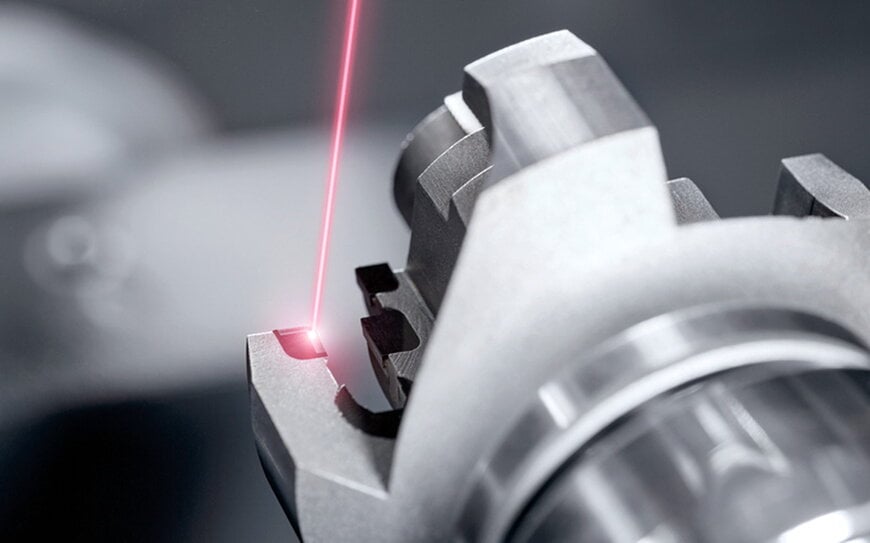
The DMG MORI LASERTEC 20 PrecisionTool produces sharp cutting edges under 1 µm.
Laser-Based Edge Finishing and Micron-Level Precision
Following the additive build, the LASERTEC 20 PrecisionTool performs 5-axis laser finishing of the cutting edges. This process achieves a functional edge sharpness of less than 1 µm. The system is capable of processing 1.6 mm thick PCD at speeds of up to 5 mm/min within a single clamping, eliminating the need for secondary manual processing.
Measurable technical benchmarks for this laser-controlled rounding process include:
Measurable technical benchmarks for this laser-controlled rounding process include:
- Defined edge radii: Programmable settings for 3 µm, 6 µm, 9 µm, and 15 µm.
- Edge Sharpness: Precision levels maintained below 1 µm.
- Durability: A documented increase in tool service life by a factor of 2.5 compared to traditionally ground edges.
For the micro-tooling sector, the LASERTEC 50 PrecisionTool Femto utilizes ultra-short pulsed (USP) laser ablation. This "cold" ablation technique is critical for tools with diameters of 0.2 mm or larger, where mechanical grinding forces would typically cause substrate fracture or thermal degradation. The femtosecond laser removes material virtually force-free, ensuring the geometric integrity of soldered PCD miniature tools.
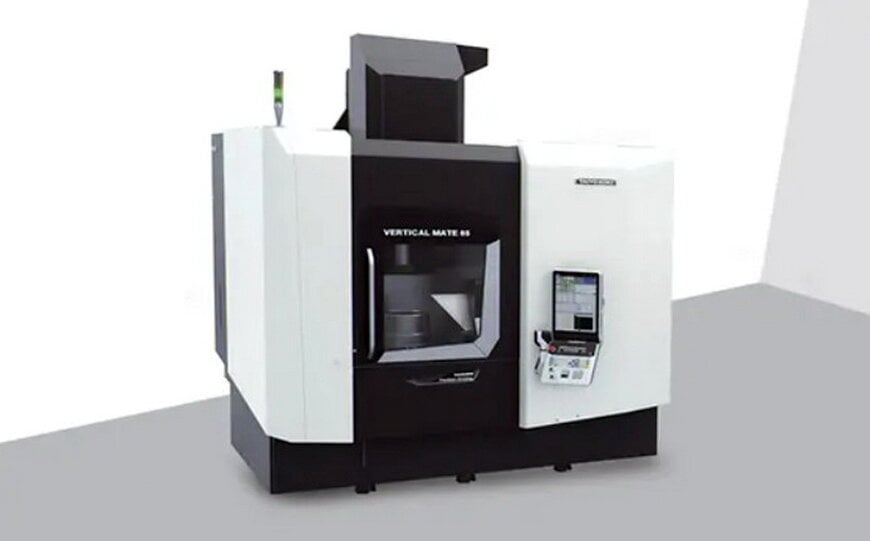
The DMG MORI Vertical Mate 85 2. Generation enables multi-process grinding of inner and outer diameters as well as flat surfaces in a single clamping.
Multi-Process Grinding for High-Tolerance Components
In addition to laser-based solutions, conventional precision grinding remains a requirement for high-volume rotational components. The second-generation Vertical Mate 85 serves as a multi-process platform for machining inner diameters, outer diameters, and flat surfaces in a single setup.
The technical specifications of the Vertical Mate 85 2. Generation include a speedMASTER LongNose spindle delivering 18.5 kW of power and 35.3 Nm of torque at 10,000 rpm. Equipped with a linear scale in the X-axis for thermal stability, the machine achieves a roundness tolerance of 1 µm. These parameters are specifically designed to meet the rigorous quality standards of the semiconductor, aerospace, and mobility industries.
Edited by Industrial Journalist, Evgeny Churilov – AI Powered
www.en.dmgmori.com
The technical specifications of the Vertical Mate 85 2. Generation include a speedMASTER LongNose spindle delivering 18.5 kW of power and 35.3 Nm of torque at 10,000 rpm. Equipped with a linear scale in the X-axis for thermal stability, the machine achieves a roundness tolerance of 1 µm. These parameters are specifically designed to meet the rigorous quality standards of the semiconductor, aerospace, and mobility industries.
Edited by Industrial Journalist, Evgeny Churilov – AI Powered
www.en.dmgmori.com
