
metalworkingmag.com
06
'26
Written on Modified on
Strategic metal recovery for defense additive manufacturing
6K Additive supports conversion of military scrap into certified metal powders to strengthen supply resilience in the defense manufacturing ecosystem.
6kadditive.com
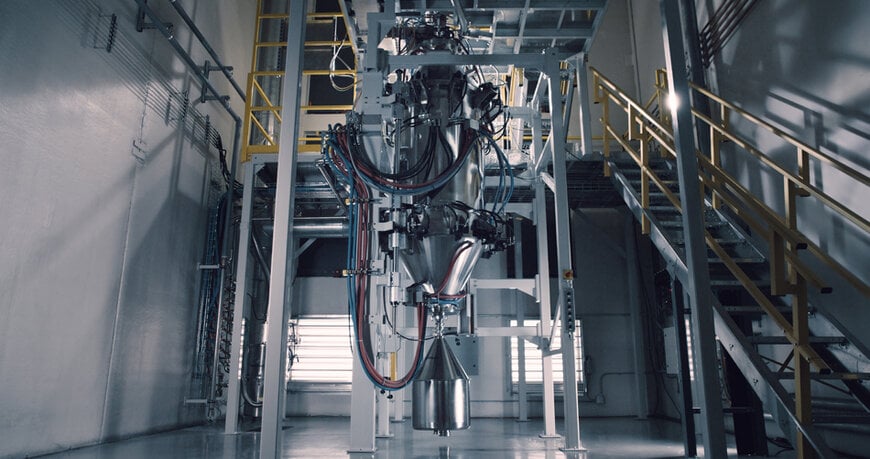
Recovering critical metals from end-of-life components is becoming a strategic priority in defense manufacturing, particularly where additive manufacturing depends on secure material supply chains. In this context, 6K Additive secured a US$1.95 million Defense Logistics Agency contract to convert military scrap into metal powders.
Reducing dependence on imported strategic metals
The project addresses supply chain risks affecting the U.S. defense industrial base, particularly for metals such as tungsten, niobium and titanium, which are widely used in aerospace systems, defense hardware and high-temperature applications.
Global supply concentration remains a constraint. China accounts for more than 80 % of global tungsten production, while the United States relies entirely on niobium imports, mainly from Brazil and Canada. Titanium imports have also been identified by the U.S. Department of Commerce as a potential national security concern.
The program focuses on establishing a circular materials flow by converting domestic scrap from military depots into feedstock for additive manufacturing, contributing to a more resilient digital supply chain for defense production.
Converting decommissioned parts into certified powder feedstock
The 18-month Phase II contract supports the “Recovering Strategic Value” initiative, which focuses on reclaiming nickel, titanium, tungsten and C103 (niobium alloy) from end-of-life components sourced from U.S. Department of Defense (DoD) depots.
The technical scope includes material identification and collection from Defense Logistics Agency (DLA) depots, development of robotic automation concepts for scrap sorting, and powder production from reclaimed alloys. The project also includes cold spray testing to evaluate the mechanical performance of recycled nickel and titanium powders in repair applications.
Cold spray processes are used in maintenance operations to restore worn components by depositing metal powder at high velocity without melting, allowing repair of high-value parts while limiting thermal distortion.
Integration with defense maintenance and testing workflows
The work involves cooperation with the DLA, the U.S. Navy and the Air Force Life Cycle Management Center, with material sourcing from aviation depots generating approximately 60,000 lb of mixed scrap metal per week.
Produced powders will undergo qualification testing against virgin material benchmarks to verify their suitability for mission-critical applications. The objective is to demonstrate that reclaimed powders can meet the same performance criteria required for defense manufacturing and maintenance operations.
Processing route combines scrap preparation and plasma conversion
The material conversion process combines three core technology elements: proprietary scrap sizing processes to produce angular precursor powder, the UniMelt® microwave plasma platform, and internal post-processing operations to produce spherical powders suitable for additive manufacturing.
This approach enables the transformation of production waste, such as machining turnings and decommissioned components, into powders with morphology and material properties required for powder bed and directed energy deposition processes.
Program milestones and government funding background
The contract includes milestones related to the demonstration of automated sorting systems and the delivery of certified tungsten, titanium and niobium powder batches.
The award adds to previous government funding supporting development of domestic powder production capacity, including a US$23.4 million Defense Production Act Title III grant, US$12.4 million in prior Defense Logistics Agency programs related to titanium, nickel and niobium recycling, and a US$27.4 million Export-Import Bank loan facility.
These programs focus on strengthening domestic materials processing capacity for defense manufacturing and reducing exposure to external supply risks in critical material categories.
Edited by industrial journalist Aishwarya Mambet, with AI-assistance.
www.6kadditive.com
