
metalworkingmag.com
09
'26
Written on Modified on
Transparent resin advances micro-scale optical 3D printing
BMF introduces a photopolymer for micro-precision additive manufacturing, supporting optical components, microfluidics and biomedical device prototyping with high light transmission.
bmf3d.com
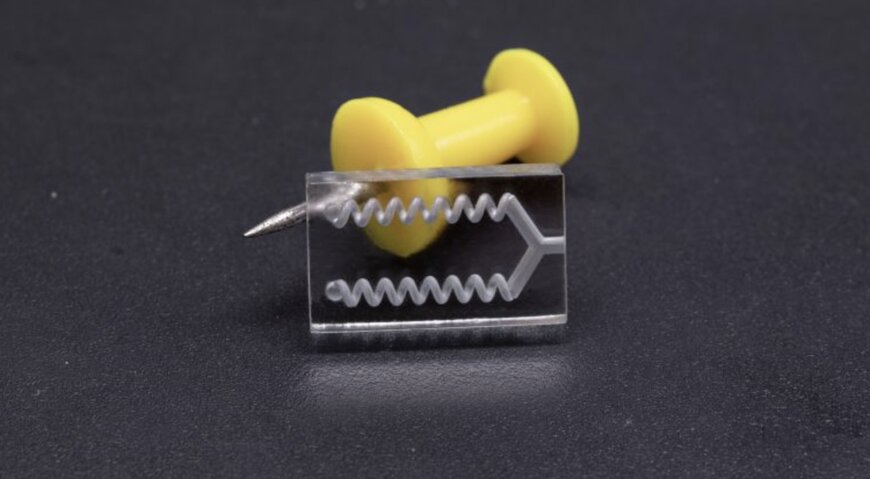
BMF Clear enables scalable production of microfluidic devices, micro lenses, and integrated optical interfaces.
Material limitations have constrained the use of additive manufacturing in micro-optics and microfluidic device fabrication, particularly where optical clarity is required alongside micron-scale precision. Boston Micro Fabrication introduced BMF Clear, a transparent photopolymer resin developed for micro-precision 3D printing applications in photonics, biomedical engineering and analytical systems.
Optical transparency combined with micro-precision additive manufacturing
Achieving optical transparency in micro-scale additive manufacturing has been limited by surface roughness and material absorption effects that reduce light transmission. BMF Clear addresses this by offering light transmittance above 90%, enabling the production of optically functional microstructures with internal geometries.
The material is intended for applications such as microfluidic lab-on-chip devices, photonic interfaces and optical sensing components, where both dimensional precision and optical performance are required. These use cases are relevant in research environments as well as in scalable micro-manufacturing workflows within the precision manufacturing ecosystem.
The resin enables fabrication of structures including fiber alignment channels, freeform micro-lenses directly printed on optical fibre tips, integrated waveguides and photonic interfaces for sensing and data transmission applications.
From prototyping constraints to scalable micro-device production
Micro-scale optical devices have often relied on traditional fabrication approaches such as PDMS soft lithography, which can limit durability, design flexibility and scalability. The BMF Clear material is designed to support the transition from prototyping toward repeatable additive manufacturing processes by enabling complex geometries and internal optical features within a single print process.
The resin is compatible with Boston Micro Fabrication’s 10-micron and 25-micron resolution platforms and supports layer thicknesses between 10 µm and 50 µm. Compatibility includes systems such as the microArch® S150 series as well as higher specification platforms within the company’s Projection Micro Stereolithography (PµSL™) portfolio.
High resolution and improved surface quality can reduce internal light scattering, which is important for optical signal transmission and microfluidic visualisation. The material characteristics also reduce the need for post-processing steps typically required to improve transparency in additively manufactured optical parts.
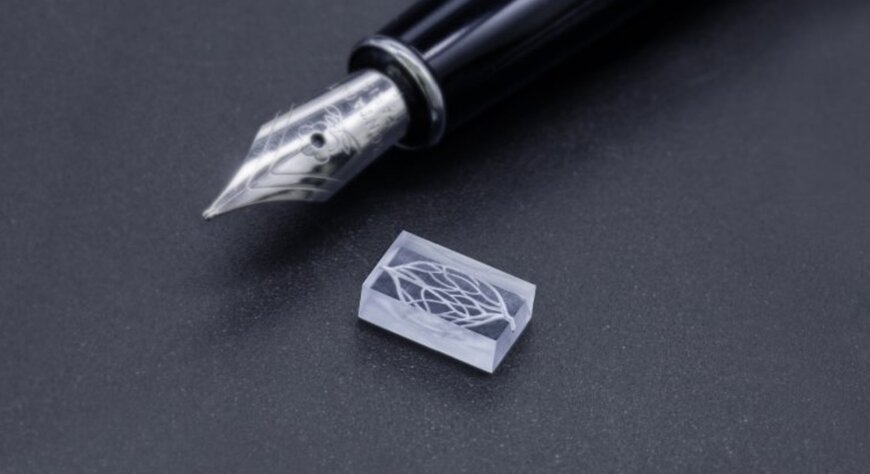
BMF Clear is an optically transparent photopolymer resin delivering 90% light transmission and micron level accuracy for complex, internally structured micro scale devices.
Application scope from photonics to biomedical micro-devices
The material is designed for applications across photonics, biomedical engineering and analytical instrumentation. In microfluidics, optical transparency enables visual inspection of internal flow channels and supports analytical processes such as droplet generation and cell culture monitoring.
Within integrated photonics and micro-optics, the resin supports direct printing of components such as micro-lenses, waveguides and fibre-to-chip coupling structures. These components are relevant for sensing, imaging and high-speed data communication systems where optical alignment and miniaturisation are key design constraints.
Biocompatibility testing included evaluation for skin irritation, sensitisation and in-vitro cytotoxicity, supporting use in biomedical device development. Potential applications include endoscopic tools, intraocular devices and minimally invasive drug delivery systems where internal visibility and dimensional precision are required.
The material can also be used for spectroscopic components such as optical waveguides, sensors and integrated flow cells for UV/Vis and fluorescence analysis. Integration of optical windows directly into printed devices can reduce assembly complexity and alignment tolerances in laboratory instrumentation design.
Edited by industrial journalist Aishwarya Mambet, with AI-assistance.
www.bmf3d.com
Material limitations have constrained the use of additive manufacturing in micro-optics and microfluidic device fabrication, particularly where optical clarity is required alongside micron-scale precision. Boston Micro Fabrication introduced BMF Clear, a transparent photopolymer resin developed for micro-precision 3D printing applications in photonics, biomedical engineering and analytical systems.
Optical transparency combined with micro-precision additive manufacturing
Achieving optical transparency in micro-scale additive manufacturing has been limited by surface roughness and material absorption effects that reduce light transmission. BMF Clear addresses this by offering light transmittance above 90%, enabling the production of optically functional microstructures with internal geometries.
The material is intended for applications such as microfluidic lab-on-chip devices, photonic interfaces and optical sensing components, where both dimensional precision and optical performance are required. These use cases are relevant in research environments as well as in scalable micro-manufacturing workflows within the precision manufacturing ecosystem.
The resin enables fabrication of structures including fiber alignment channels, freeform micro-lenses directly printed on optical fibre tips, integrated waveguides and photonic interfaces for sensing and data transmission applications.
From prototyping constraints to scalable micro-device production
Micro-scale optical devices have often relied on traditional fabrication approaches such as PDMS soft lithography, which can limit durability, design flexibility and scalability. The BMF Clear material is designed to support the transition from prototyping toward repeatable additive manufacturing processes by enabling complex geometries and internal optical features within a single print process.
The resin is compatible with Boston Micro Fabrication’s 10-micron and 25-micron resolution platforms and supports layer thicknesses between 10 µm and 50 µm. Compatibility includes systems such as the microArch® S150 series as well as higher specification platforms within the company’s Projection Micro Stereolithography (PµSL™) portfolio.
High resolution and improved surface quality can reduce internal light scattering, which is important for optical signal transmission and microfluidic visualisation. The material characteristics also reduce the need for post-processing steps typically required to improve transparency in additively manufactured optical parts.
BMF Clear is an optically transparent photopolymer resin delivering 90% light transmission and micron level accuracy for complex, internally structured micro scale devices.
Application scope from photonics to biomedical micro-devices
The material is designed for applications across photonics, biomedical engineering and analytical instrumentation. In microfluidics, optical transparency enables visual inspection of internal flow channels and supports analytical processes such as droplet generation and cell culture monitoring.
Within integrated photonics and micro-optics, the resin supports direct printing of components such as micro-lenses, waveguides and fibre-to-chip coupling structures. These components are relevant for sensing, imaging and high-speed data communication systems where optical alignment and miniaturisation are key design constraints.
Biocompatibility testing included evaluation for skin irritation, sensitisation and in-vitro cytotoxicity, supporting use in biomedical device development. Potential applications include endoscopic tools, intraocular devices and minimally invasive drug delivery systems where internal visibility and dimensional precision are required.
The material can also be used for spectroscopic components such as optical waveguides, sensors and integrated flow cells for UV/Vis and fluorescence analysis. Integration of optical windows directly into printed devices can reduce assembly complexity and alignment tolerances in laboratory instrumentation design.
Edited by industrial journalist Aishwarya Mambet, with AI-assistance.
www.bmf3d.com
