
metalworkingmag.com
12
'26
Written on Modified on
Ultrasonic deburring system for surgical saw blades
Aesculap automates the deburring of surgical saw blades using ultraTEC’s ultrasonic technology to achieve contact-free processing and improved manufacturing efficiency.
www.vollmer-group.com
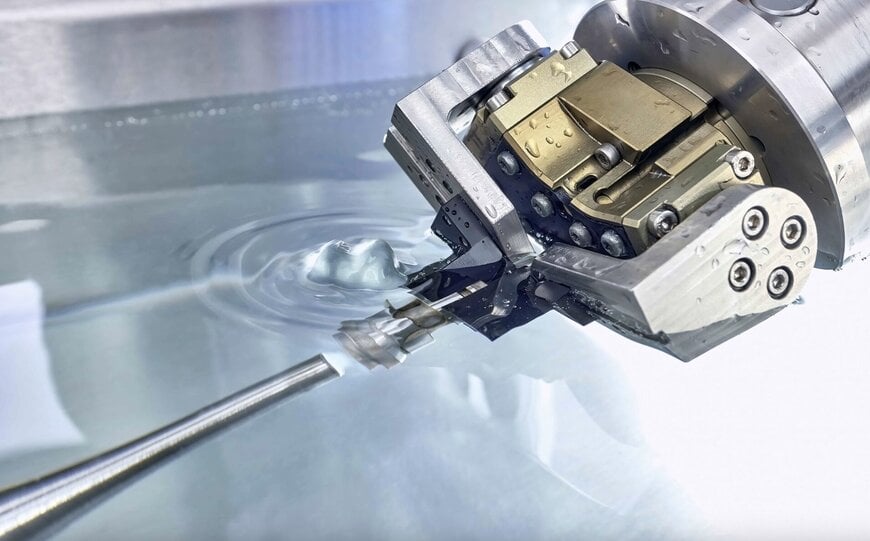
Aesculap AG has transitioned the deburring process for its Rapid Action saw blades from manual labor to an automated, contact-free system developed by ultraTEC innovation GmbH (part of Vollmer Group). This technical solution utilizes ultrasonic energy to remove micro-scale burrs from stainless steel components, ensuring surgical-grade precision and operational reliability.
Technical mechanisms of ultrasonic oscillation and deburring
The deburring process is executed within a process water tank where the saw blades are exposed to high-frequency ultrasonic energy generated by a sonotrode. Stimulated by a generator, the sonotrode oscillates at a frequency of 20,000 Hz (20kHz) with an amplitude of 0.1 mm. These high-frequency vibrations cause the burrs and fibers on the high-grade stainless steel blade to move rapidly until they reach mechanical fatigue and break off. This contact-free method is particularly advantageous for medical manufacturing because it preserves the integrity of the sharp cutting edges while ensuring that the removal of unwanted material is reliable and clean.
Automation and integration into the digital supply chain
The transition to the ultraTEC A25 S system allows Aesculap to move away from labor-intensive manual deburring, which previously required up to six employees using nylon brushes and scrapers. The new automated workflow is integrated into a seamless production chain:
- Workpiece Handling: Saw blades are transported within a dedicated carrier that holds up to 180 parts.
- Pneumatic Gripper System: A gripper autonomously transfers the blades into the process tank without manual intervention.
- Multi-Sonotrode Processing: Up to three sonotrodes allow for the machining of multiple blade types (lengths from 40 mm to 60 mm) in a single clamping operation.
- Throughput Optimization: The complete processing cycle for one Rapid Action saw blade is reduced to 60 seconds, enabling unmanned shift operations and increasing total facility capacity.
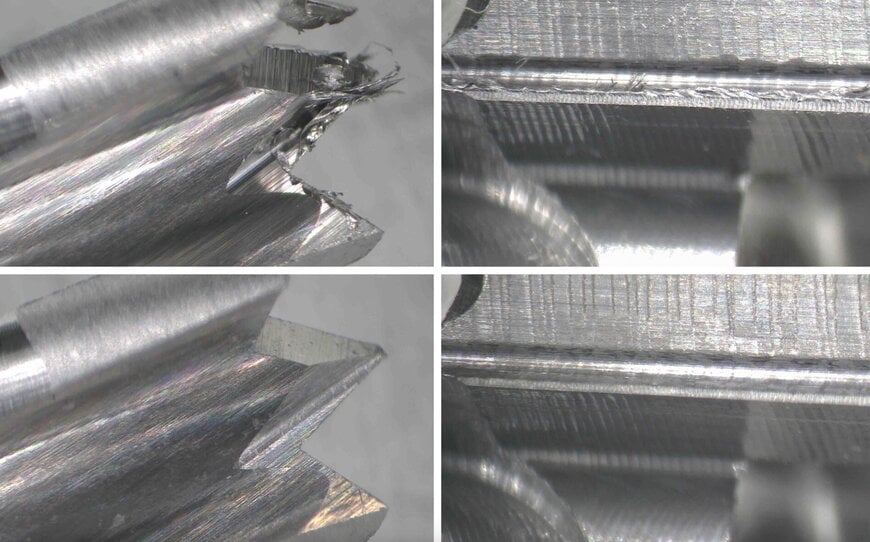
Impact on quality assurance and validation
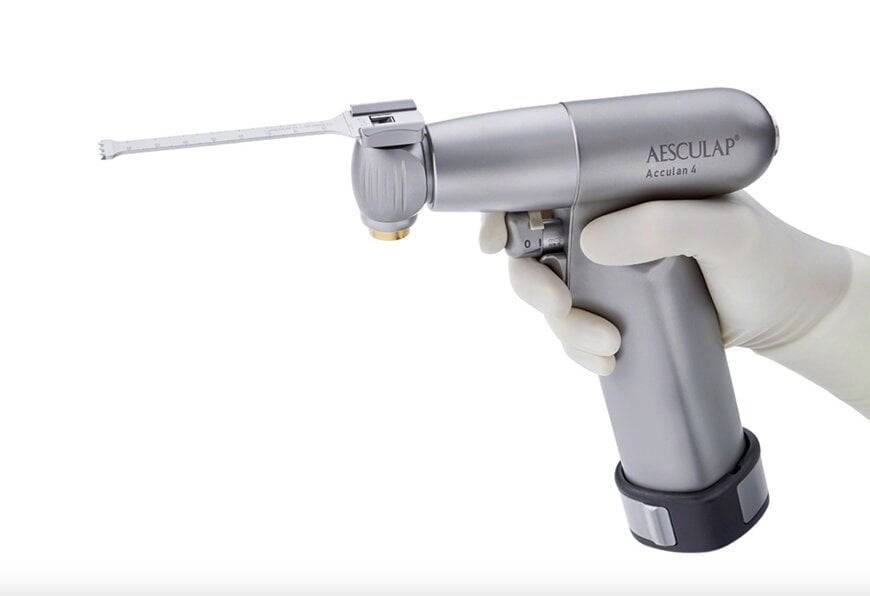
Aesculap manufactures surgical instruments down to the micrometer scale, including delicate tools for micro-needles with diameters of approximately 70 micrometers. Maintaining consistent quality across a portfolio of 28,000 products requires highly repeatable processes. The implementation of the A25 S system facilitates the planned validation of the deburring process, which will eventually allow the company to eliminate one of its two 100% inspection stages. This optimization reduces the burden on the automotive data ecosystem of quality control while maintaining the stringent safety standards required for single-use medical devices used in bone and tissue incisions.
Additional Context
This section details technical specifications and competitive benchmarking not included in the original product announcement.
Ultrasonic deburring benchmarks as a superior alternative to thermal energy deburring (TEM) or electrochemical deburring (ECD) for delicate medical instruments. While TEM can cause unwanted heat-affected zones (HAZ) that alter the hardness of the stainless steel cutting edge, the ultrasonic process remains "cold," preserving the metallurgical properties of the Aesculap blades. Technically, the 20 kHz frequency utilized by the A25 S is optimized to prevent cavitation erosion on the primary surface while focusing energy on the thinner cross-sections of the burrs. In terms of the digital supply chain, the ultraTEC system’s ability to handle various blade geometries (lengths of 25–90 mm and widths of 5–30 mm) within a single software-controlled environment provides a significant flexibility advantage over vibratory finishing, which often lacks the precision required for micrometer-scale medical components.
Edited by Romila DSilva, Induportals editor – adapted by AI.
Aesculap manufactures surgical instruments down to the micrometer scale, including delicate tools for micro-needles with diameters of approximately 70 micrometers. Maintaining consistent quality across a portfolio of 28,000 products requires highly repeatable processes. The implementation of the A25 S system facilitates the planned validation of the deburring process, which will eventually allow the company to eliminate one of its two 100% inspection stages. This optimization reduces the burden on the automotive data ecosystem of quality control while maintaining the stringent safety standards required for single-use medical devices used in bone and tissue incisions.
Additional Context
This section details technical specifications and competitive benchmarking not included in the original product announcement.
Ultrasonic deburring benchmarks as a superior alternative to thermal energy deburring (TEM) or electrochemical deburring (ECD) for delicate medical instruments. While TEM can cause unwanted heat-affected zones (HAZ) that alter the hardness of the stainless steel cutting edge, the ultrasonic process remains "cold," preserving the metallurgical properties of the Aesculap blades. Technically, the 20 kHz frequency utilized by the A25 S is optimized to prevent cavitation erosion on the primary surface while focusing energy on the thinner cross-sections of the burrs. In terms of the digital supply chain, the ultraTEC system’s ability to handle various blade geometries (lengths of 25–90 mm and widths of 5–30 mm) within a single software-controlled environment provides a significant flexibility advantage over vibratory finishing, which often lacks the precision required for micrometer-scale medical components.
Edited by Romila DSilva, Induportals editor – adapted by AI.
