
metalworkingmag.com
27
'26
Written on Modified on
Nagel Group integrates superfinishing process chain technologies
Integrated machining solutions combine grinding, honing, and superfinishing technologies to improve process stability, surface quality, and efficiency in precision manufacturing applications.
www.nagel-group.com
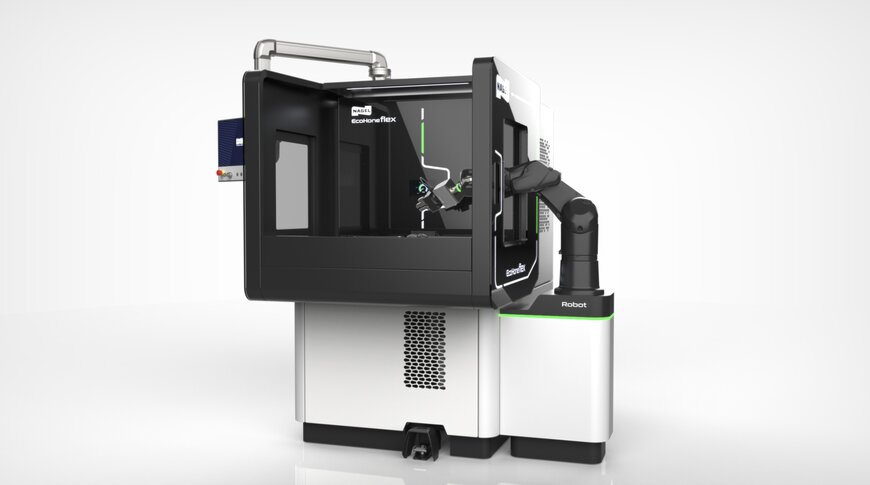
EcoHone flex by Nagel Technologies: Modular honing solution for flexible manufacturing—featuring short setup times, integrated automation interfaces, and reliable, process-stable machining even with varying components and batch sizes. Photo: Nagel Technologies
Precision surface finishing increasingly depends on the coordination of multiple machining processes rather than isolated technologies, particularly in industries such as automotive, aerospace, and hydraulics. In this context, Nagel Group is presenting an integrated portfolio of superfinishing technologies at Grinding Hub 2026 (May 5 to 8), held in Stuttgart, Germany, covering the full machining chain from grinding to polishing.
A unified process chain across multiple finishing technologies
Industrial superfinishing involves a combination of grinding, honing, lapping, polishing, and related processes, each requiring specialized tooling and machine configurations. The Nagel Group consolidates these capabilities through its affiliated companies, including Nagel Technologies, Gehring Technologies, Gehring Diato, KADIA, FLP Microfinishing, O.ERRE.PI., and ELGAN.
This structure enables coverage of the full superfinishing value chain within a single automotive data ecosystem for machining processes. Tooling plays a central role, with diamond-, CBN-, and ceramic-based tools engineered for specific materials and applications, such as machining coated brake discs or generating friction-optimized surfaces.
By integrating machines, tools, and process expertise, the system reduces coordination effort across multiple suppliers and establishes a single responsibility framework for machining outcomes.
Coordinated process design in industrial applications
The impact of this integrated approach is reflected in applications where multiple finishing processes are combined to meet component-specific requirements.
In aerospace maintenance, an airline group has internalized the servicing of axial piston pumps, focusing on function-critical interfaces between raceways and pistons. The solution combines KADIA honing with Nagel Technologies superfinishing, creating a direct process link that ensures reproducible surface quality without intermediate handling steps.
A similar configuration is used in automotive transmission manufacturing, where KADIA honing and Nagel superfinishing are combined with shared cooling and filtration systems. This setup supports series production with controlled dimensional accuracy and surface characteristics while maintaining cost efficiency.
In the bearing industry, grinding systems from O.ERRE.PI. are integrated with Nagel superfinishing technologies to machine inner and outer rings. Additional processes can be incorporated within the same framework, enabling near-complete coverage of the mechanical production chain.
Machine-level integration and data-driven control
At the equipment level, process integration is implemented through machines capable of combining multiple finishing steps and capturing process data across the machining cycle.
FLP Microfinishing is presenting the HE series, including the HE540, which integrates fine grinding, lapping, and polishing within a single platform. The system combines planetary processing with fine grinding to achieve uniform material removal and consistent surface quality, particularly for thin-walled components.
Gehring Technologies is presenting the Deephone 2000 honing machine, designed for internal diameters from 20 to 600 mm. The system incorporates internal cooling at the tool interface and in-process measurement via the GHC control system. Optional air back-pressure measurement enables continuous monitoring and real-time correction through a closed-loop control structure.
KADIA is presenting the second-generation E line, featuring the LH2x honing spindle with three direct drives. Combined with HMC100 measurement technology, the system enables continuous bore scanning with up to 500 measurement values per millimeter, allowing immediate compensation of form deviations.
These systems illustrate how process control is shifting toward closed-loop architectures, where machining, metrology, and control systems operate as a unified system within a digital supply chain for manufacturing data.
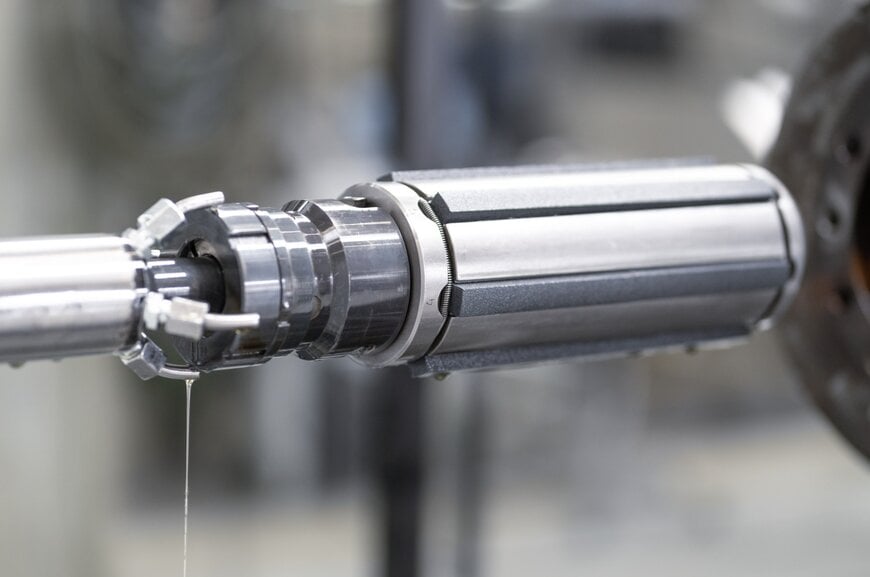
Gehring Diato cutting strip and DH tool: Cutting strip and DH tool, precisely engineered for demanding honing processes requiring exceptional dimensional accuracy and superior form precision. Photo: Gehring Diato
Modular architectures for flexible production
Flexible manufacturing requirements are addressed through modular machine concepts such as EcoHone flex, EASYHONE VRX, and the NaShaft Eco platform from Nagel Technologies. These systems use standardized interfaces and short setup times to accommodate varying component geometries and batch sizes.
Adaptive process controls maintain surface quality while reducing friction, emissions, and energy consumption of machined components. This approach supports both efficiency improvements and alignment with sustainability requirements in high-volume production environments.
In grinding, O.ERRE.PI. is presenting the MTD 610 DR-R double-sided surface grinding machine. Equipped with dual opposing slides, Siemens brushless motors, and a 30 kW water-cooled spindle, the system ensures stable power delivery and thermal consistency. Automated loading and flexible dressing systems support continuous operation with reproducible results.
Tooling as an integrated process element
Tool development is embedded within the overall process design. ELGAN Diamantwerkzeuge GmbH & Co. KG and Gehring Diato develop and supply diamond and CBN tools tailored to specific machining tasks, materials, and machine configurations.
These tools are engineered as part of the complete system rather than as standalone components, enabling tighter control over process stability, repeatability, and component quality. Continuous adaptation of tooling and cutting media ensures alignment with evolving production requirements.
Process expertise and production stability
A key differentiator lies in the alignment of machine design, tooling, and process engineering. By developing and adapting all elements within a unified framework, the system reduces process variability and operator dependency.
This approach enables faster adaptation to new components, material changes, or tighter tolerances. In high-volume production scenarios, it contributes to shorter ramp-up phases, improved repeatability, and lower total cost of ownership.
Edited by Aishwarya Mambet, Induportals Editor, with AI assistance.
www.nagel.com
Precision surface finishing increasingly depends on the coordination of multiple machining processes rather than isolated technologies, particularly in industries such as automotive, aerospace, and hydraulics. In this context, Nagel Group is presenting an integrated portfolio of superfinishing technologies at Grinding Hub 2026 (May 5 to 8), held in Stuttgart, Germany, covering the full machining chain from grinding to polishing.
A unified process chain across multiple finishing technologies
Industrial superfinishing involves a combination of grinding, honing, lapping, polishing, and related processes, each requiring specialized tooling and machine configurations. The Nagel Group consolidates these capabilities through its affiliated companies, including Nagel Technologies, Gehring Technologies, Gehring Diato, KADIA, FLP Microfinishing, O.ERRE.PI., and ELGAN.
This structure enables coverage of the full superfinishing value chain within a single automotive data ecosystem for machining processes. Tooling plays a central role, with diamond-, CBN-, and ceramic-based tools engineered for specific materials and applications, such as machining coated brake discs or generating friction-optimized surfaces.
By integrating machines, tools, and process expertise, the system reduces coordination effort across multiple suppliers and establishes a single responsibility framework for machining outcomes.
Coordinated process design in industrial applications
The impact of this integrated approach is reflected in applications where multiple finishing processes are combined to meet component-specific requirements.
In aerospace maintenance, an airline group has internalized the servicing of axial piston pumps, focusing on function-critical interfaces between raceways and pistons. The solution combines KADIA honing with Nagel Technologies superfinishing, creating a direct process link that ensures reproducible surface quality without intermediate handling steps.
A similar configuration is used in automotive transmission manufacturing, where KADIA honing and Nagel superfinishing are combined with shared cooling and filtration systems. This setup supports series production with controlled dimensional accuracy and surface characteristics while maintaining cost efficiency.
In the bearing industry, grinding systems from O.ERRE.PI. are integrated with Nagel superfinishing technologies to machine inner and outer rings. Additional processes can be incorporated within the same framework, enabling near-complete coverage of the mechanical production chain.
Machine-level integration and data-driven control
At the equipment level, process integration is implemented through machines capable of combining multiple finishing steps and capturing process data across the machining cycle.
FLP Microfinishing is presenting the HE series, including the HE540, which integrates fine grinding, lapping, and polishing within a single platform. The system combines planetary processing with fine grinding to achieve uniform material removal and consistent surface quality, particularly for thin-walled components.
Gehring Technologies is presenting the Deephone 2000 honing machine, designed for internal diameters from 20 to 600 mm. The system incorporates internal cooling at the tool interface and in-process measurement via the GHC control system. Optional air back-pressure measurement enables continuous monitoring and real-time correction through a closed-loop control structure.
KADIA is presenting the second-generation E line, featuring the LH2x honing spindle with three direct drives. Combined with HMC100 measurement technology, the system enables continuous bore scanning with up to 500 measurement values per millimeter, allowing immediate compensation of form deviations.
These systems illustrate how process control is shifting toward closed-loop architectures, where machining, metrology, and control systems operate as a unified system within a digital supply chain for manufacturing data.
Gehring Diato cutting strip and DH tool: Cutting strip and DH tool, precisely engineered for demanding honing processes requiring exceptional dimensional accuracy and superior form precision. Photo: Gehring Diato
Modular architectures for flexible production
Flexible manufacturing requirements are addressed through modular machine concepts such as EcoHone flex, EASYHONE VRX, and the NaShaft Eco platform from Nagel Technologies. These systems use standardized interfaces and short setup times to accommodate varying component geometries and batch sizes.
Adaptive process controls maintain surface quality while reducing friction, emissions, and energy consumption of machined components. This approach supports both efficiency improvements and alignment with sustainability requirements in high-volume production environments.
In grinding, O.ERRE.PI. is presenting the MTD 610 DR-R double-sided surface grinding machine. Equipped with dual opposing slides, Siemens brushless motors, and a 30 kW water-cooled spindle, the system ensures stable power delivery and thermal consistency. Automated loading and flexible dressing systems support continuous operation with reproducible results.
Tooling as an integrated process element
Tool development is embedded within the overall process design. ELGAN Diamantwerkzeuge GmbH & Co. KG and Gehring Diato develop and supply diamond and CBN tools tailored to specific machining tasks, materials, and machine configurations.
These tools are engineered as part of the complete system rather than as standalone components, enabling tighter control over process stability, repeatability, and component quality. Continuous adaptation of tooling and cutting media ensures alignment with evolving production requirements.
Process expertise and production stability
A key differentiator lies in the alignment of machine design, tooling, and process engineering. By developing and adapting all elements within a unified framework, the system reduces process variability and operator dependency.
This approach enables faster adaptation to new components, material changes, or tighter tolerances. In high-volume production scenarios, it contributes to shorter ramp-up phases, improved repeatability, and lower total cost of ownership.
Edited by Aishwarya Mambet, Induportals Editor, with AI assistance.
www.nagel.com
