
metalworkingmag.com
04
'26
Written on Modified on
Oxygen-Enriched Combustion Reduces NOx Emissions
Fives presents combustion optimization research at TOTeM, focusing on efficiency gains and emission control in industrial furnaces.
www.fivesgroup.com
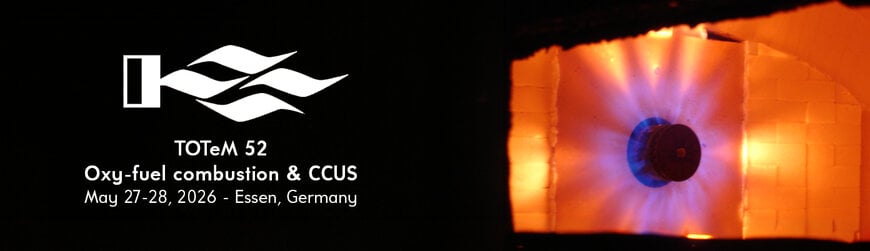
The latest research on oxygen-enriched combustion demonstrates how moderate oxygen levels can improve thermal efficiency while limiting nitrogen oxide (NOx) emissions in industrial heating systems. The findings are particularly relevant for steel production and other energy-intensive sectors seeking to optimize furnace performance.
Combustion Optimization for Industrial Furnaces
At the Topic Oriented Technical Meeting (TOTeM), organized by the International Flame Research Foundation, Fives will present experimental results on air-fuel burner optimization. The event is scheduled for May 27–28, 2026, in Essen and focuses on oxy-fuel and oxygen-enriched combustion technologies.
The presented study evaluates the effects of moderate oxygen enrichment on flame structure and NOx formation using AdvanTek MWF 2.0 burners in a semi-industrial furnace. These burners are designed for high-temperature industrial processes, particularly in steel manufacturing, where combustion efficiency directly impacts energy consumption and emissions.
Mechanisms of Efficiency Improvement
Oxygen enrichment modifies combustion dynamics by increasing flame temperature and reducing nitrogen dilution in the oxidizer stream. In conventional air-fuel combustion, nitrogen accounts for approximately 78% of the oxidizer, contributing to heat losses and NOx formation through thermal mechanisms.
By moderately increasing oxygen concentration, the study shows:
- Improved heat transfer efficiency due to higher flame temperatures
- Reduced flue gas volume, enhancing thermal utilization
- Stabilized flame structure under controlled enrichment levels
These factors contribute to a more efficient digital supply chain in steel production, where energy optimization and emissions tracking are increasingly integrated into process control systems.
NOx Emissions Control Through Flame Management
A central focus of the research is the relationship between oxygen enrichment and NOx formation. While high oxygen levels can increase NOx due to elevated temperatures, the study demonstrates that moderate enrichment achieves a balance.
Experimental results indicate that controlled oxygen levels:
NOx Emissions Control Through Flame Management
A central focus of the research is the relationship between oxygen enrichment and NOx formation. While high oxygen levels can increase NOx due to elevated temperatures, the study demonstrates that moderate enrichment achieves a balance.
Experimental results indicate that controlled oxygen levels:
- Limit peak flame temperatures that drive thermal NOx formation
- Maintain stable combustion zones, reducing local hotspots
- Enable cleaner combustion without compromising output
This approach aligns with tightening environmental regulations in the steel industry, where NOx emissions are subject to strict limits.
Industrial Applications and Relevance
The findings are applicable to reheating furnaces, heat treatment systems, and other high-temperature processes in steel and metallurgical industries. By integrating oxygen-enriched combustion into furnace design, operators can reduce fuel consumption while maintaining compliance with emissions standards.
The research also supports the broader transition toward an automotive data ecosystem, where upstream steel production processes are increasingly required to meet traceable sustainability metrics for downstream manufacturing.
Technical Contribution to Combustion Research
The study presented by Fives’ RDI specialists contributes empirical data on semi-industrial furnace performance, bridging the gap between laboratory-scale combustion research and full-scale industrial deployment. By focusing on measurable parameters such as flame structure, oxygen concentration, and NOx output, the work provides a basis for optimizing burner configurations in real-world applications.
The presentation is scheduled for May 27, 2026, at 15:00 during the TOTeM conference.
Edited by an industrial journalist Sucithra Mani with AI assistance.
www.fivesgroup.com
Industrial Applications and Relevance
The findings are applicable to reheating furnaces, heat treatment systems, and other high-temperature processes in steel and metallurgical industries. By integrating oxygen-enriched combustion into furnace design, operators can reduce fuel consumption while maintaining compliance with emissions standards.
The research also supports the broader transition toward an automotive data ecosystem, where upstream steel production processes are increasingly required to meet traceable sustainability metrics for downstream manufacturing.
Technical Contribution to Combustion Research
The study presented by Fives’ RDI specialists contributes empirical data on semi-industrial furnace performance, bridging the gap between laboratory-scale combustion research and full-scale industrial deployment. By focusing on measurable parameters such as flame structure, oxygen concentration, and NOx output, the work provides a basis for optimizing burner configurations in real-world applications.
The presentation is scheduled for May 27, 2026, at 15:00 during the TOTeM conference.
Edited by an industrial journalist Sucithra Mani with AI assistance.
www.fivesgroup.com
