
metalworkingmag.com
28
'26
Written on Modified on
Grinding Productivity Optimization for Cutting Tool Manufacturing
ANCA introduces a performance engineering program focused on reducing grinding cycle times through process optimization, software tuning, and machine-level productivity improvements.
machines.anca.com
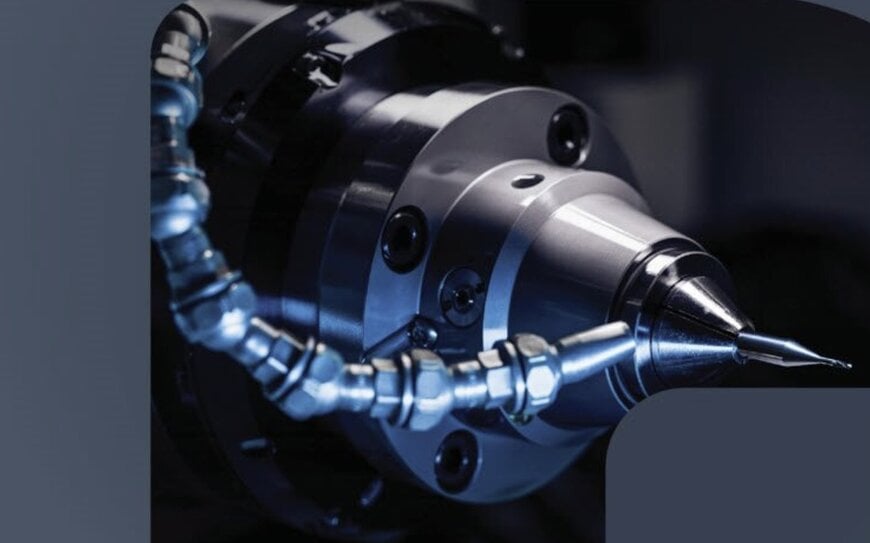
As cutting tool manufacturers face higher carbide costs, tighter production schedules, and increasing competitive pressure, machine utilization and grinding efficiency are becoming critical operational factors. ANCA has introduced Performance+, a structured productivity optimization program designed to reduce grinding cycle times while maintaining dimensional accuracy and cutting tool quality in carbide tool manufacturing environments.
The program targets industrial applications involving CNC tool grinding, high-volume cutting tool production, and precision manufacturing operations where throughput, spindle utilization, and process consistency directly affect operational profitability.
Cycle Time Reduction Through Grinding Process Optimization
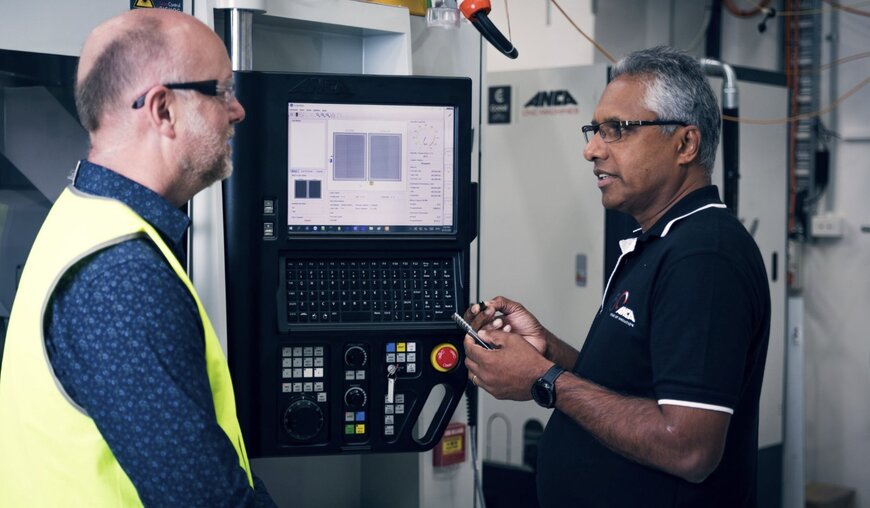
Performance+ combines machine optimization, software adjustments, consumable analysis, and operator-level process refinement into a structured productivity program. Rather than functioning as a standalone software package, the program operates as a consultancy-led engineering process focused on identifying inefficiencies across the grinding ecosystem.
The implementation begins with an operational evaluation covering machine setup, cycle-time performance, tooling configurations, coolant strategy, wheel selection, and production targets. Based on this assessment, ANCA engineers provide recommendations supported by ROI analysis and application-specific implementation guidance.
The objective is to identify process bottlenecks that increase non-cutting time, reduce spindle efficiency, or create unnecessary machine movements during grinding operations. According to ANCA, the program guarantees a minimum 10% reduction in cycle time when recommended process modifications are implemented.
Grinding Software and Hardware Integration
Performance+ builds on ANCA technologies including ToolRoom RN35 optimization software, Motor Temperature Control (MTC), Grind Point Velocity, and Tool Runout Compensation systems.
The software tools are designed to optimize grinding trajectories, stabilize thermal behavior, and improve consistency during high-speed grinding operations. Grind Point Velocity technology maintains controlled wheel speed relative to the tool geometry, while Tool Runout Compensation reduces inaccuracies caused by spindle or tool deviations during grinding cycles.
The program also incorporates consumable optimization strategies involving wheel specifications, coolant delivery, and grinding process refinement. ANCA stated that additional software enhancements, selected hardware upgrades, and structured operator training are combined based on the manufacturer’s production priorities and dominant tool types.
The company noted that the program is not deployed as a standardized package. Instead, optimization strategies are configured around the top-performing or highest-volume cutting tools within each production environment.
Measured Productivity Improvements in Tool Manufacturing
ANCA reported that cycle-time reductions achieved through Performance+ have ranged from 25% to 35% depending on machine configuration, wheel selection, software deployment, and process refinement strategies. In some manufacturing environments, reductions reportedly reached up to 40% without reducing tool quality.
According to production comparisons based on 16-hour shifts operating five days per week, the optimization program demonstrated increases ranging from 123 to 659 additional tools per month depending on tool geometry and application type.
The same analysis indicated monthly savings between 30 and 80 production hours per machine.
The productivity gains are primarily associated with reductions in idle machine movement, optimization of grinding paths, lower non-cutting time, and improved thermal process stability.
Cutting Tool Manufacturing Applications
The program is intended for manufacturers producing carbide cutting tools in sectors including aerospace machining, automotive manufacturing, industrial tooling, and precision metalworking.
In these industries, cycle-time reduction directly influences machine throughput, production scheduling, and cost-per-tool calculations. Because carbide material prices have increased significantly in recent years, manufacturers are increasingly focused on maximizing productivity gains from existing grinding infrastructure instead of expanding machine footprints.
ANCA stated that Performance+ is intended to help manufacturers increase output using existing CNC grinding systems through process-level optimization rather than large-scale equipment replacement.
Additional Context
This section details technical specifications and competitive benchmarking not included in the original news release.
In CNC tool grinding and grinding process optimization markets, ANCA competes with manufacturers including Walter Maschinenbau, Rollomatic, Vollmer, and Strausak. Competitive benchmarking in this sector typically focuses on cycle time, spindle utilization, grinding accuracy, automation capability, thermal stability, and software-assisted process optimization.
Modern tool grinding systems increasingly integrate adaptive software controls, thermal compensation algorithms, digital twins, and automated wheel management systems to improve repeatability and reduce operator intervention. Comparable optimization approaches are also used in high-volume grinding environments where predictive process analytics and machine-learning-assisted parameter adjustments are becoming more common.
Cycle-time optimization in carbide tool grinding is particularly important in applications involving complex geometries, multi-flute tools, and small-diameter cutting tools where machine motion efficiency and wheel-path optimization significantly affect production economics.
Edited by Aishwarya Mambet, Induportals Editor, with AI assistance.
www.anca.com
