
metalworkingmag.com
25
'26
Written on Modified on
Optimizing Multi-Axis Machining Workflows for Precision Manufacturing
FANUC America has introduced a standardization program to align computer-aided manufacturing software, machine kinematics, and numerical control configurations across precision machining environments.
www.fanuc.eu
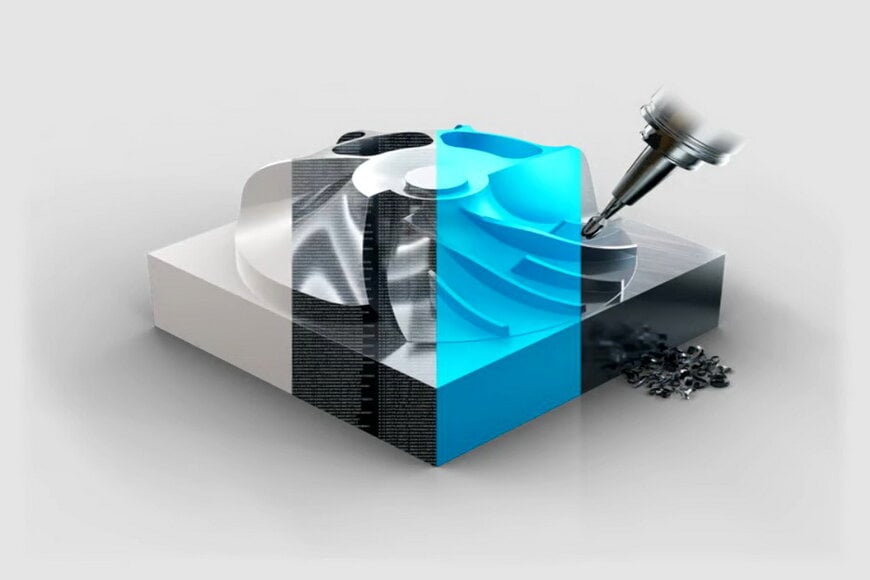
A multi-sector engineering initiative unites computer numerical control (CNC) developers, machine tool builders, and computer-aided design and manufacturing (CAD/CAM) vendors to eliminate proprietary, machine-bound post-processing bottlenecks in aerospace and complex component manufacturing. The framework establishes standardized five-axis machining best practices to ensure continuous tool center point control, uniform multi-axis kinematics, and automated toolpath execution across disparate production systems.
Standardizing Multi-Axis Post-Processing and Kinematics
Legacy five-axis CNC machining workflows frequently require machine-specific G-code adjustments and manual axis vector calculations. This dependency forces engineering teams to reprogram, re-simulate, and adjust toolpaths whenever production shifts between different machine platforms. The resulting variance increases setup times, elevates scrap rates, and complicates quality assurance in high-tolerance applications such as turbomachinery and airframe production.
The standardization framework replaces machine-dependent programming with standardized part-specific programming. By synchronizing kinematic definitions across CAM post processors and native CNC control parameters, part programs remain functionally identical regardless of the target machine tool architecture.
"This methodology significantly reduces the 'art-to-part' development time because the program is the same regardless of which machine is used," stated Rick Schultz, Executive Director of Aerospace at FANUC America. "Instead of designing a part, posting a program, testing it on a machine and then adjusting the post processor or program for that specific machine, manufacturers can rely on a consistent process that works across machines."
Ecosystem Integration and Empirical Validation
The framework aligns four critical stages of the digital-to-physical workflow: the CAD/CAM toolpath generation engine, the software post processor, the virtual kinematic simulation twin, and the physical machine tool control.
Machine builders and CAD/CAM software providers must validate their implementations by cutting a standardized five-axis test artifact. Machining this standardized benchmark geometry serves as verification that the combined controller settings, volumetric error compensation, and high-speed motion planning profiles execute with repeatable precision.
Additional Context
This section details technical specifications and competitive benchmarking not included in the original product announcement.
Standardization in multi-axis machining relies on native high-speed smooth tool center point (TCP) control and coordinate transformation functions, such as Smooth TCP (G43.4/G43.5) and Workpiece Setting Error Compensation (G54.4). These functions compute vector trajectories directly within the CNC interpolation cycle rather than requiring CAM software to break curves into dense point-to-point linear segments.
Comparable multi-axis optimization ecosystems operate under alternative numerical control architectures:
- Siemens Sinumerik (e.g., 840D sl / ONE) utilizes the Advanced Surface and Top Surface motion control packages alongside standard kinematics cycles (CYCLE996, CYCLE800) and native TRAORI transformations to maintain toolpath continuity across variable kinematic configurations.
- Heidenhain (e.g., TNC 640) relies on Dynamic Precision packages—including Cross Talk Compensation (CTC) and KinematicsOpt—to decouple tool positioning from individual machine structural deflection, standardizing multi-axis execution through conversational Plane Functions and spatial vector definitions.
Both architectures achieve machine-independent CAM programming by offloading geometric and kinematic transformations to the internal controller rather than the external post processor.
Edited by Evgeny Churilov, Induportals Media - Adapted by AI.
www.fanucamerica.com
Edited by Evgeny Churilov, Induportals Media - Adapted by AI.
www.fanucamerica.com
