
metalworkingmag.com
15
'26
Written on Modified on
DMG MORI at the AMB 2026
From September 15 to 19, in Stuttgart, Germany, DMG MORI integrates Renishaw measuring technology to establish autonomous feedback loops for metal-cutting manufacturing environments.
en.dmgmori.com
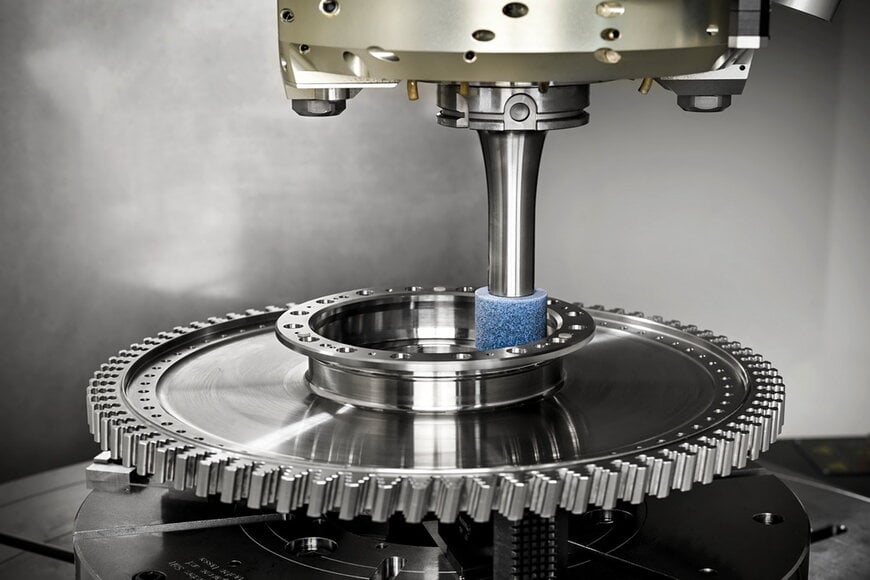
DMG MORI and Renishaw have demonstrated an integrated manufacturing cell combining automated part handling and closed-loop metrology for industrial automation across serial metal-cutting operations. The joint system utilizes CNC machine tools, industrial robotics, and shop-floor gauging systems to automate machining correction processes.
Technical Challenge and Partnership Rationale
Precision component machining demands continuous tolerance monitoring to counteract tool wear, thermal variations, and raw material inconsistencies. Conventional quality assurance relies on off-line metrology, which introduces transfer latency, requires manual inspection intervals, and increases scrap rates during batch production.
To overcome these delays, DMG MORI partnered with Renishaw to connect workpiece inspection directly to the CNC execution environment. This architecture merges machine-level kinematics and handling robotics with dedicated comparative metrology without manual intervention.
Integrated Measurement Architecture
The installation incorporates the DMG MORI MATRIS WPH robotic handling system alongside the Renishaw Equator comparative gauging system.
Workpieces processed within the machining envelope are transferred by the robot directly into the inspection station. The gauge inspects critical geometric features against a calibrated master reference. Measurement data is transmitted directly into the machine tool numerical control system via standard digital interfaces. The CNC platform computes dimensional deviations, adjusts tool offset values autonomously, and applies dynamic tool compensation prior to consecutive machining runs.
Operational Benefits and Implementation
The closed-loop system is exhibited at the AMB exhibition in Stuttgart, taking place from September 15 to 19, 2026. The automation cell targets serial production sectors, including automotive and precision mechanical engineering, where process stability and continuous production cycles are required.
Direct feedback of offset data eliminates manual machine adjustments and minimizes scrap by stabilizing machining dimensions within set tolerances. When paired with driverless transport mechanisms and digital planning infrastructure, the integrated cell supports unmanned manufacturing shifts and reduces unplanned downtime during high-mix or continuous production runs.
Edited by Evgeny Churilov, Induportals Media - Adapted by AI.
www.en.dmgmori.com
