
metalworkingmag.com
01
'26
Written on Modified on
Electric Arc Furnace Decarbonization in Steelmaking
Tenova and GE Vernova deliver a high-capacity Consteel electric arc furnace and direct feed system to decarbonize Nippon Steel Yawata Works operations.
tenova.com
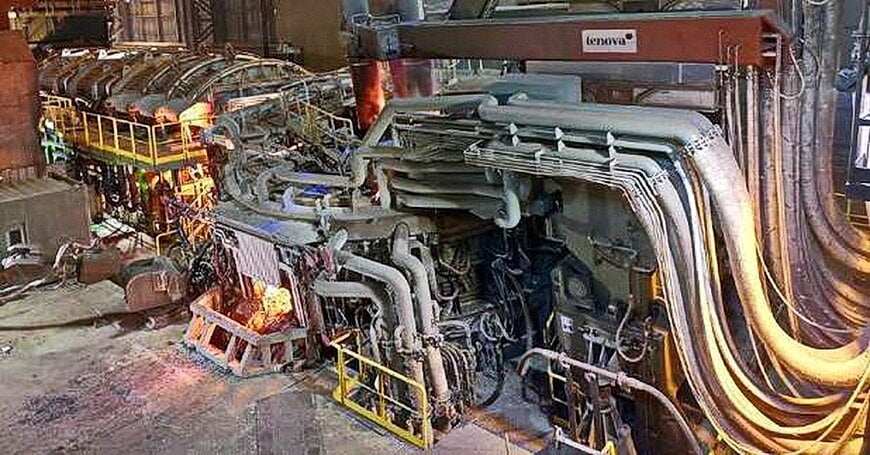
Nippon Steel Corporation has selected Tenova and GE Vernova to design and install an industrial electric arc furnace system at its Kyushu Works Yawata Area. The installation provides primary metallurgy equipment engineered to replace traditional blast furnace operations with lower-emission melting technology.
Industrial Challenge and Decarbonization Targets
Primary steel manufacturing relies heavily on blast furnace routes that generate significant carbon dioxide per ton of liquid steel. Transitioning to electrical steelmaking enables primary producers to lower emissions in accordance with Japan's Green Transformation Promotion Act. However, operating an electric arc furnace on virgin iron charges requires elevated electrical power capacity and exceptional grid stability, particularly when processing high-grade structural and automotive steels.
Technical Architecture and Equipment Scope
Tenova will supply a continuous-charging Consteel electric arc furnace featuring a 340-ton heat capacity. The continuous feeding mechanism preheats metallic scrap and direct-reduced iron units using furnace off-gas before melting, lowering specific electrical energy consumption per heat. The 340-ton capacity supports the melting kinetics necessary to process high ratios of virgin iron units without compromising steel chemistry.
To manage the high power inputs required by this continuous furnace, GE Vernova provides its Direct Feed power conversion system. Electric arc melting induces severe dynamic load swings, reactive power consumption, and harmonic disturbances that stress transmission networks. The Direct Feed system couples electrical power directly to the furnace electrodes while regulating current fluctuations, stabilizing arc performance, and mitigating flicker on the local utility grid.
Operational Integration and Plant Impact
The system integrates directly into existing melt shop infrastructure at the Yawata facility. Tenova oversees the core furnace engineering, off-gas handling, and continuous feed automation. GE Vernova delivers the medium-voltage electrical architecture, solid-state power conditioning, and digital drive controls.
Operating with preheated continuous charging and direct power control provides consistent thermal profiles in the melt pool. This operational stability allows Nippon Steel to manufacture clean, high-grade steel products previously restricted to basic oxygen furnace routes, directly advancing the plant toward its 2050 carbon neutrality objectives.
Strategic Technical Perspectives
"This record-setting EAF is not only an engineering achievement, but it also embodies a shared commitment with GE Vernova to sustainability that defines the future of our industry," stated Paolo Argenta, Executive Vice President of the Upstream Business Unit at Tenova.
"Our Direct Feed solution shows how advanced power technologies can support energy-intensive industries in operating more efficiently and reliably while accelerating their long-term decarbonization goals," stated Ed Torres, Business Leader of Power Conversion and Storage at GE Vernova.
Edited by Evgeny Churilov, Induportals Media - Adapted by AI.
www.tenova.com
