
metalworkingmag.com
17
'25
Written on Modified on
Wire-laser DED adoption moves into industrial supply chains
Meltio’s 2025 deployments and reference projects show how wire-based Directed Energy Deposition is being integrated into defense, automotive, energy, and heavy industry workflows.
www.meltio3d.com
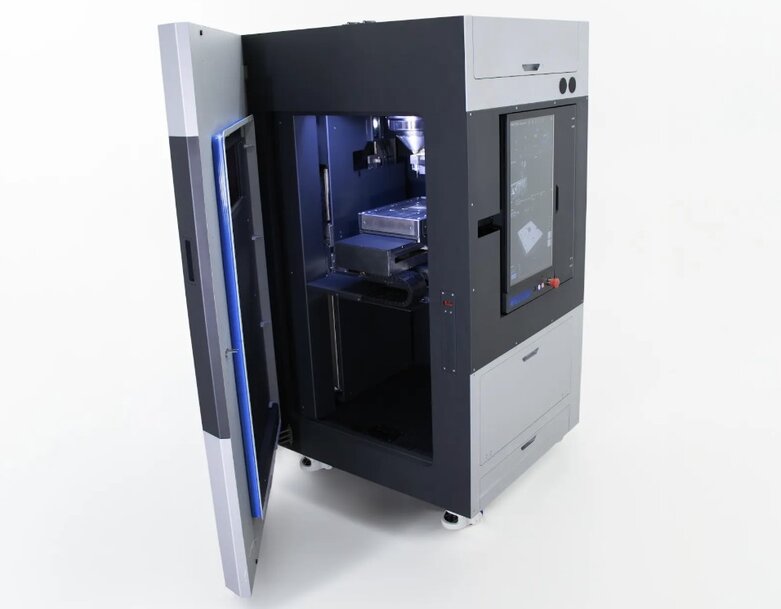
During 2025, wire-laser Directed Energy Deposition (DED) moved from pilot use into active industrial supply chains, as manufacturers and defense organizations deployed metal additive manufacturing systems for production and repair. Meltio’s installations, reference sites, and public demonstrations illustrate how wire-based metal AM is being applied to reduce lead times, improve material efficiency, and increase supply chain resilience across multiple sectors.
From demonstration technology to operational manufacturing
Wire-laser metal additive manufacturing has traditionally been evaluated in controlled environments, often separated from day-to-day production. In 2025, this separation narrowed as Meltio expanded the use of its systems into operational contexts, supported by verified case studies and deployments across automotive, defense, mining, naval, and oil and gas applications.
The company’s participation in a broad range of international trade shows—including MilAM, Rapid + TCT, EMO Hannover, and Formnext—reflected a deliberate shift toward engaging manufacturing audiences beyond additive manufacturing specialists. These venues focus on production engineering, machine tools, and industrial efficiency, where AM adoption is assessed against conventional processes such as casting, forging, and machining.
Defense and contested logistics environments
At MilAM and Rapid + TCT, the emphasis was on defense logistics and operational readiness. Military organizations increasingly evaluate additive manufacturing as a way to address supply disruptions and long replacement cycles for critical components.
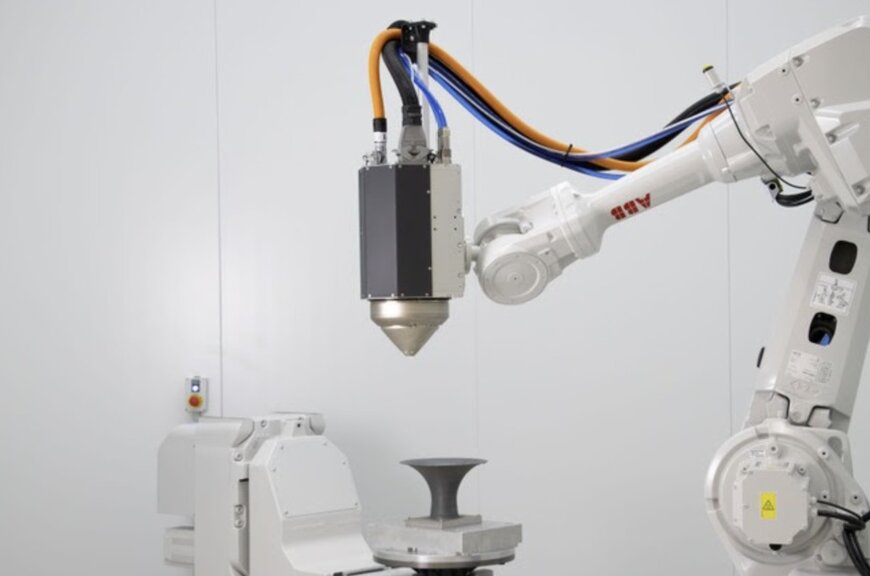
One demonstrated case involved the use of the Meltio Robot Cell to restore a reverse-osmosis pump aboard a naval vessel in 34 hours, significantly faster than conventional procurement and delivery timelines. This example highlighted the role of on-site metal AM in maintenance and repair operations where delays directly affect mission availability.
In another defense application, Meltio technology was used in collaboration with AM Solutions to redesign ice cleats for the K2 Black Panther main battle tank. The original steel components weighed 10.74 kg; redesigning them with an AM-optimized honeycomb structure reduced the weight to 4.26 kg while maintaining mechanical performance. The reduction lowered handling strain for personnel without compromising functionality.
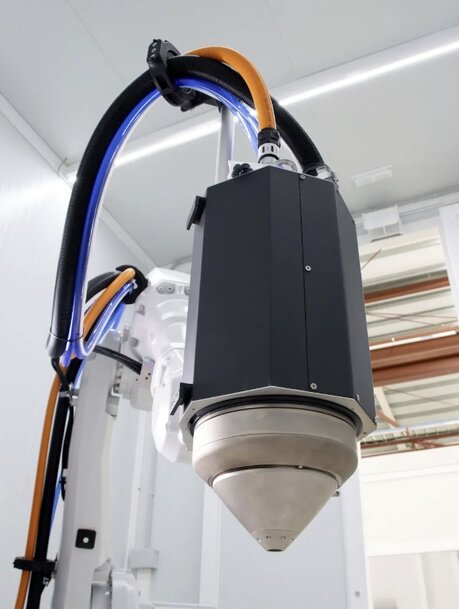
Hybrid manufacturing was also demonstrated through the integration of the Meltio Engine Blue into a Haas CNC machine in partnership with Phillips Corporation. This configuration combines additive deposition with subtractive machining in a single workflow, enabling higher dimensional accuracy, reduced material waste, and shorter lead times—factors that are critical in defense sustainment and deployment scenarios.
Automotive, tooling, and energy applications
At EMO Hannover and Formnext, the focus shifted toward high-volume manufacturing economics, where adoption decisions are driven by cycle time, cost per part, and return on investment. A representative example was the Hirudi stub axle, produced using Meltio’s wire-laser metal deposition process as part of a hybrid manufacturing strategy.
Compared with a traditional forging route, the additively manufactured and machined component achieved a 62.5% weight reduction and a 35.7% cost reduction. Production time for the part was just over 21 hours, representing a lead-time reduction of approximately 33%. These results support the use of wire-based DED for functional engine components and tooling, including evaluation by automotive manufacturers such as Iveco.
In oil and gas contexts, where downtime costs are high and logistics are complex, Meltio demonstrated how on-site additive manufacturing can support rapid repair and part replacement. The technology’s ability to process corrosion-resistant materials such as Inconel 718 and stainless steels aligns with the environmental and mechanical demands of energy infrastructure.
On-site production as a supply chain strategy
A central theme of 2025 deployments was industrial autonomy—the ability to manufacture or repair metal parts directly at or near the point of use. This approach was highlighted by the opening of Meltio’s first international reference site in Danville, Virginia, developed with commercial partner Fastech.
The facility serves as a demonstration and validation hub for North American customers in defense, naval, and energy sectors. It showcases operational systems such as the Meltio M600 industrial metal 3D printer and the Meltio Robot Cell producing full-scale industrial components, allowing organizations to evaluate performance, materials, and workflows under realistic conditions.
Blue laser deposition and material range
Many of these applications are enabled by the Meltio Engine Blue, which was prominently demonstrated during the year. The system uses a 1.4 kW blue laser, calibrated to improve energy absorption when processing reflective materials such as copper and aluminum compared with infrared laser sources.
According to performance data presented by the company, the blue-laser configuration reduces energy consumption by approximately 30% and achieves deposition rates up to 3.5 times higher than previous generations. At the Danville site, Meltio demonstrated multi-material production, including components such as an artillery shell and a naval propeller shaft bracket produced in marine bronze and stainless steel.
Implications for industrial adoption
Across defense, automotive, and energy sectors, the 2025 deployments show wire-laser DED being evaluated not as a standalone novelty but as part of integrated manufacturing strategies. By enabling near-series production, repair, and hybrid manufacturing, the technology addresses recurring challenges related to lead time, material efficiency, and supply chain exposure.
The accumulation of verified use cases during the year indicates that wire-based Directed Energy Deposition is increasingly treated as a practical manufacturing option within industrial supply chains, particularly where flexibility and on-site capability outweigh the limitations of centralized production models.
www.meltio3d.com
