
metalworkingmag.com
19
'26
Written on Modified on
Flexible Collaborative Automation in CNC Workshops
Modular cobot systems from Tezmaksan help manufacturers overcome labor shortages and rigid layouts while enhancing flexibility and operational continuity.
www.tezmaksan.com
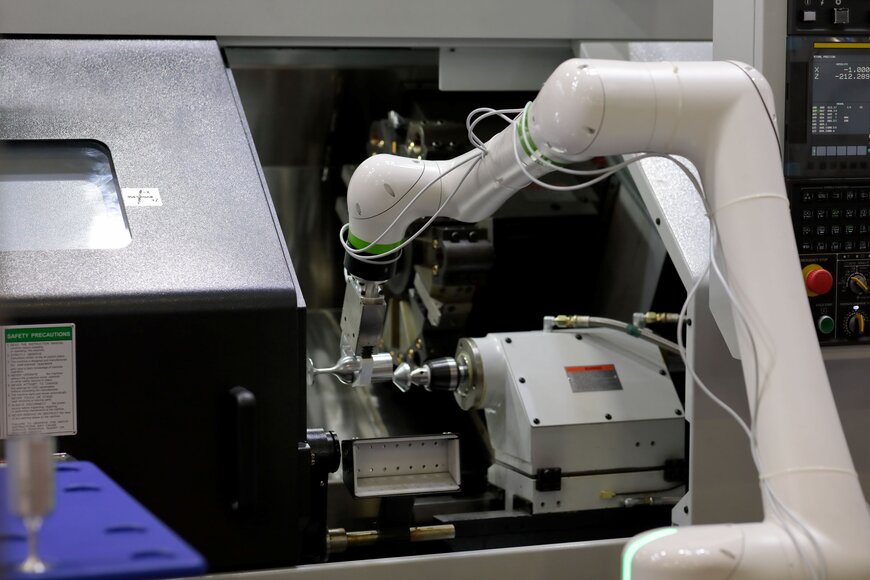
Manufacturing companies, particularly in the field of CNC machining, operate in an environment characterized by increasing production demand and difficulties in recruiting skilled workers. According to recent industry analyses, a significant proportion of open positions remains unfilled due to a lack of adequate skills.
In addition, there are structural limitations of existing facilities: rigid layouts, outdated infrastructures, and legacy systems that are not designed for integration with modern robotic solutions. In this context, companies are seeking solutions that improve productivity, operational continuity, and ergonomics without requiring excessive investments or major modifications to existing plants.
Objectives: Productivity, Flexibility, and Safety
The priorities of manufacturers include:
- Maintaining consistent production levels despite labor shortages
- Improving quality and process repeatability
- Reducing physical strain and risks for operators
- Increasing flexibility to adapt to variable batch sizes and production changes
Collaborative automation is emerging as an effective response to these needs, as it enables the automation of repetitive tasks while maintaining human-machine collaboration.
Adopted Solution: Modular Cobot Systems
To address these challenges, manufacturers are increasingly adopting systems based on collaborative robots integrated into modular cells. In this context, Tezmaksan Robot Technologies has developed solutions such as the CubeBOX EcoLEAN cells, designed specifically for CNC automation.
These systems are characterized by:
Adopted Solution: Modular Cobot Systems
To address these challenges, manufacturers are increasingly adopting systems based on collaborative robots integrated into modular cells. In this context, Tezmaksan Robot Technologies has developed solutions such as the CubeBOX EcoLEAN cells, designed specifically for CNC automation.
These systems are characterized by:
- Easy integration with existing machine tools
- Modular and reconfigurable structure
- Compatibility with various workpiece sizes and payloads
- Ability to be repositioned according to evolving production flows
The use of standardized industrial protocols and digital simulation tools also allows layouts and processes to be validated before physical installation, reducing integration risks.
Reasons for Choosing This Technology
Manufacturers choose modular collaborative solutions for their ability to overcome the limitations of traditional automation. Unlike conventional industrial robots designed for fixed operations, cobots enable rapid reconfiguration without long downtime.
Another key factor is integrated safety. Force sensors, vision systems, and safety scanners allow direct interaction with operators without the need for physical barriers, in compliance with standards such as ISO 12100 and ISO/TS 15066.
Furthermore, the evolution of European regulations particularly the Machinery Regulation 2023/1230 (applicable from 2027) is driving the adoption of solutions that ensure high standards of safety, traceability, and cybersecurity.
Implementation: Integration into Existing Environments
Implementation typically takes place in already operational production environments, where integration with legacy systems represents a major challenge. Modular cells enable gradual deployment, minimizing structural modifications while allowing scalable automation.
The process includes:
Reasons for Choosing This Technology
Manufacturers choose modular collaborative solutions for their ability to overcome the limitations of traditional automation. Unlike conventional industrial robots designed for fixed operations, cobots enable rapid reconfiguration without long downtime.
Another key factor is integrated safety. Force sensors, vision systems, and safety scanners allow direct interaction with operators without the need for physical barriers, in compliance with standards such as ISO 12100 and ISO/TS 15066.
Furthermore, the evolution of European regulations particularly the Machinery Regulation 2023/1230 (applicable from 2027) is driving the adoption of solutions that ensure high standards of safety, traceability, and cybersecurity.
Implementation: Integration into Existing Environments
Implementation typically takes place in already operational production environments, where integration with legacy systems represents a major challenge. Modular cells enable gradual deployment, minimizing structural modifications while allowing scalable automation.
The process includes:
- Application-specific risk analysis
- Digital simulation of operational workflows
- Integration with existing CNC machines
- Operator training for system management
This approach reduces commissioning time and allows companies to adapt automation to their internal capabilities.
Results: Operational Continuity and ROI
Although results may vary depending on the application, the introduction of cobots in CNC workshops generally leads to:
Results: Operational Continuity and ROI
Although results may vary depending on the application, the introduction of cobots in CNC workshops generally leads to:
- Increased productivity through automation of repetitive tasks
- Improved quality and process consistency
- Reduced downtime during changeovers
- Lower ergonomic strain on operators
The possibility of incremental implementation also makes investments more sustainable, supporting a medium-term return on investment.
Towards Accessible and Scalable Automation
The evolution of industrial automation shows a shift from rigid, centralized systems to flexible and distributed solutions. In this context, the combination of collaborative robotics and modular architectures enables small and medium-sized enterprises to access the benefits of automation.
As Hakan Aydoğdu, CEO of Tezmaksan Robot Technologies, emphasizes, the value of cobots lies not only in the technology itself but in their effective integration into existing production processes.
This transition toward more accessible and adaptable automation represents a key factor for the future competitiveness of the manufacturing sector.
Edited by an industrial journalist, Sucithra Mani, with AI assistance.
www.tezmaksan.com
Towards Accessible and Scalable Automation
The evolution of industrial automation shows a shift from rigid, centralized systems to flexible and distributed solutions. In this context, the combination of collaborative robotics and modular architectures enables small and medium-sized enterprises to access the benefits of automation.
As Hakan Aydoğdu, CEO of Tezmaksan Robot Technologies, emphasizes, the value of cobots lies not only in the technology itself but in their effective integration into existing production processes.
This transition toward more accessible and adaptable automation represents a key factor for the future competitiveness of the manufacturing sector.
Edited by an industrial journalist, Sucithra Mani, with AI assistance.
www.tezmaksan.com
