
metalworkingmag.com
24
'26
Written on Modified on
Sandvik Coromant develops milling grade for stainless steel
New insert grade targets stable multi-edge milling of corrosion-resistant alloys through nano-coating technology designed to balance wear resistance and edge toughness.
www.sandvik.coromant.com
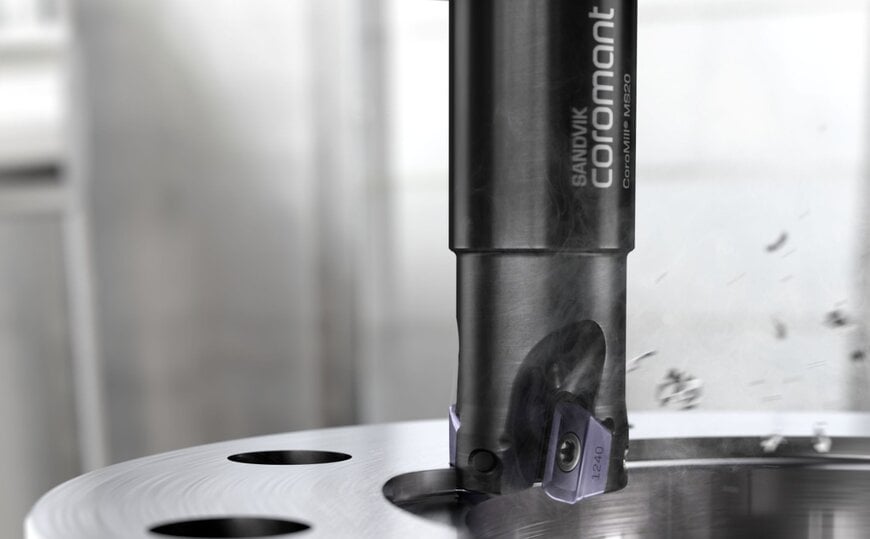
Machining stainless steels and heat-resistant alloys often requires cutting tools that can withstand high temperatures, abrasive wear, and unstable chip formation. In this context, Sandvik Coromant introduced the GC1240 indexable milling grade designed for multi-edge milling operations in stainless steel machining.
Milling challenges in stainless steel machining
Stainless steels, particularly austenitic grades, present machining challenges due to their tendency to generate heat, cause work hardening, and promote tool wear. These conditions typically require cutting tools that combine edge toughness with resistance to thermal cracking and abrasion.
The GC1240 grade addresses these requirements through a multilayer PVD nano-coating developed using Sandvik Coromant’s Zertivo® coating technology. The coating structure, based on TiAlN and TiSiN layers, is intended to improve resistance to thermal microcracks while maintaining cutting edge stability during milling operations.
This combination is designed to provide a balance between wear resistance and edge-line toughness, two properties that often require trade-offs in conventional tool grades.
Coating design supporting predictable tool life
The nano-coating architecture is intended to support stable tool performance across a range of milling conditions, from light roughing to finishing operations. The grade is suitable for both wet and dry machining environments, allowing manufacturers to adapt cutting strategies based on process requirements.
The grade’s resistance to flaking and edge chipping is particularly relevant in applications where tool failure mechanisms limit productivity and increase tooling costs. Stable edge behaviour also supports more predictable tool life, which can simplify production planning in high-mix manufacturing environments.
Dry machining potential and process efficiency
The GC1240 grade is designed to operate at elevated cutting speeds, including applications where coolant use is reduced or eliminated. In some stainless steel machining conditions, cutting speeds can be increased by up to 20% compared to processes using coolant.
Dry or reduced-coolant machining can support lower process energy consumption and reduce coolant management requirements. These characteristics are relevant in machining environments seeking to reduce process costs and environmental impact.
Application range across difficult-to-machine alloys
The grade is intended for light roughing and finishing operations in stainless steel and is also applicable to selected heat-resistant superalloys and titanium at recommended cutting parameters.
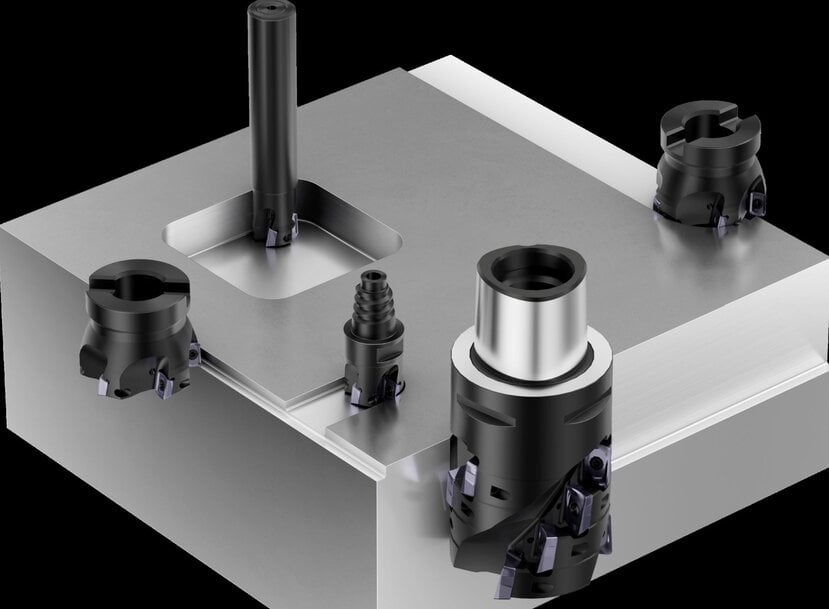
Tool geometry options include sharp, positive cutting edges designed to support cutting stability in multi-edge milling processes. The GC1240 grade is currently available across 13 CoroMill® tool families, covering 77 insert variants, enabling integration into existing milling tool platforms.
These characteristics position the grade for manufacturers seeking consistent machining performance in corrosion-resistant materials and other demanding metal cutting applications.
Edited by industrial journalist Aishwarya Mambet, with AI-assistance.
www.sandvik.coromant.com
