
metalworkingmag.com
19
'26
Written on Modified on
Walter Turning Grades for Stainless Steel
Walter optimizes stainless steel machining with the Tiger·tec Gold MT-TiCN-CVD WMP20G and WMP30G grades to stabilize industrial production.
www.walter-tools.com
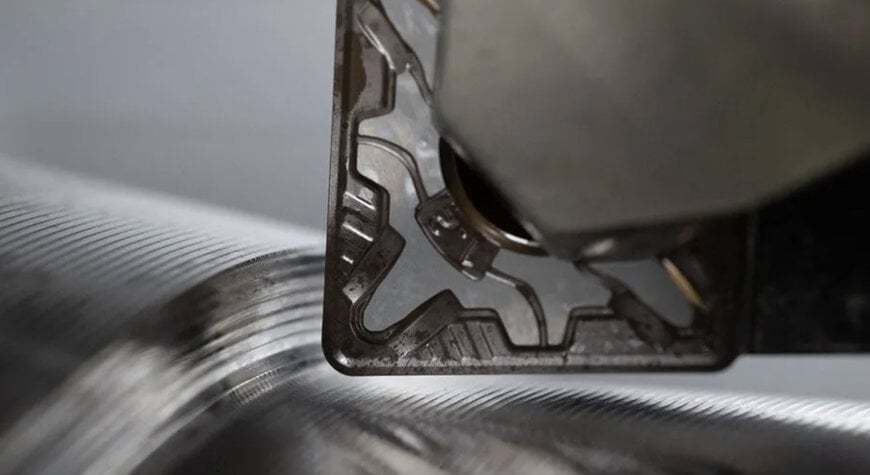
Machining stainless steel components in demanding environments requires tools capable of withstanding extreme thermal and mechanical stresses. To meet this operational challenge in the offshore, oil, gas, food processing, defense, chemical, and energy sectors, Walter introduces the new Tiger·tec® Gold MT-TiCN-CVD WMP20G and WMP30G turning grades.
Engineering Context and Operational Challenges
The growing global demand for stainless steel components requires manufacturers to continuously optimize their cutting processes. Austenitic-ferritic, martensitic, and duplex materials generate high cutting forces and rapid edge wear, compromising repeatability and increasing production costs. Mastering tool life and process reliability is therefore paramount, particularly when manufacturing large, expensive parts or during high-speed series production.
Technical Explanation and Operating Principle
The new Tiger·tec® Gold grades are based on an innovative gradient substrate architecture designed to maximize tool resilience. This structure integrates local cobalt inclusions at the cutting edge to increase toughness, while maintaining high hardness at the core of the insert. This engineering mechanism protects the edge against repeated chip impacts and drastically minimizes the risk of chipping.
Furthermore, a dual finishing treatment applied to the cutting edge significantly reduces the coefficient of friction. This substrate is coupled with a Tiger·tec® Gold MT-TiCN-CVD coating specifically calibrated for ISO M standards, as well as the RM7 roughing geometry. This geometry guarantees high structural stability, particularly when machining forged parts or turning against a shoulder, operations traditionally prone to tool breakage.
Product Relevance and Industrial Applications
Together, these metallurgical advancements constitute a unique comprehensive solution on the market, offering maximum versatility from stainless steel to carbon steel with exceptional wear resistance. The system's capabilities are divided into two strategic variants:
- WMP20G Grade: Optimized for standard applications requiring high cutting speeds in ISO M materials and up to ISO P class. It offers maximum productivity for series production thanks to its superior hardness.
- WMP30G Grade: Prioritizes toughness to secure the machining of large-scale parts, high-value unique parts, or during critical operations such as the facing of weld seams for armor applications.
Additional Context
This section details the technical specifications and competitive benchmarking that are not included in the original product announcement.
Technological evolution in machining stainless steels (ISO M) is strongly geared towards the adoption of medium-temperature CVD coatings (MT-TiCN). Unlike traditional PVD coatings, the MT-TiCN-CVD process allows for thicker and highly structured layers that better resist crater wear and the extreme temperatures generated during continuous high-speed cutting. Operationally, the combination of reinforced cutting geometries like the RM7 makes it possible to manage depths of cut generally ranging from 1.0 to 8.0 mm, with feed rates in the range of 0.25 to 0.85 mm/rev. This material removal capability stabilizes chip formation and evacuation, even under irregular or shock-generating cutting conditions.
Edited by Maria Brueva, Induportals editorial team – adapted by AI.
www.walter-tools.com
This section details the technical specifications and competitive benchmarking that are not included in the original product announcement.
Technological evolution in machining stainless steels (ISO M) is strongly geared towards the adoption of medium-temperature CVD coatings (MT-TiCN). Unlike traditional PVD coatings, the MT-TiCN-CVD process allows for thicker and highly structured layers that better resist crater wear and the extreme temperatures generated during continuous high-speed cutting. Operationally, the combination of reinforced cutting geometries like the RM7 makes it possible to manage depths of cut generally ranging from 1.0 to 8.0 mm, with feed rates in the range of 0.25 to 0.85 mm/rev. This material removal capability stabilizes chip formation and evacuation, even under irregular or shock-generating cutting conditions.
Edited by Maria Brueva, Induportals editorial team – adapted by AI.
www.walter-tools.com
